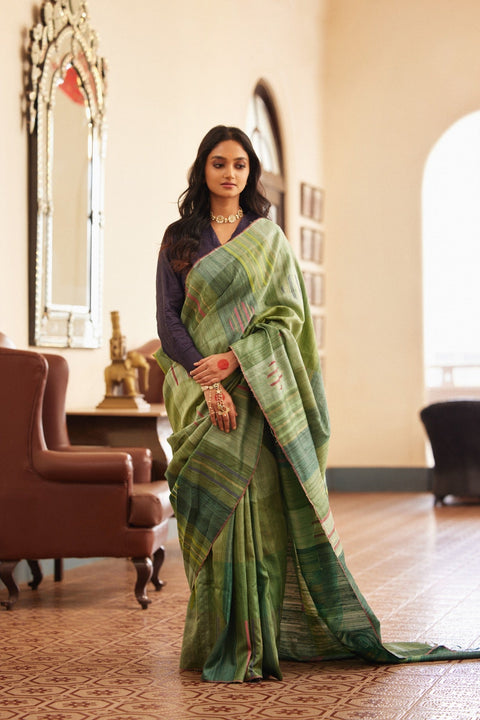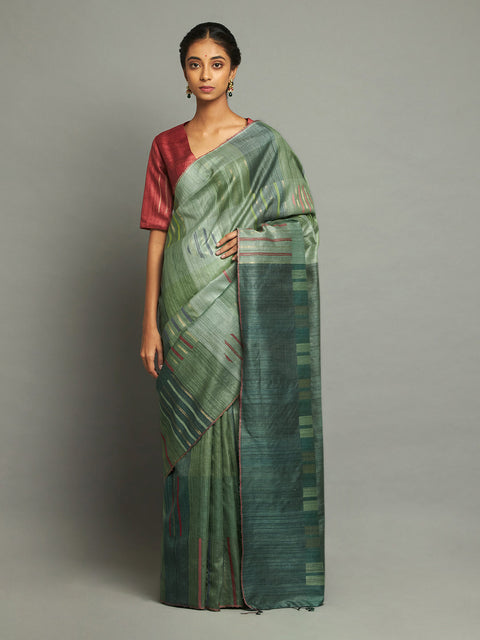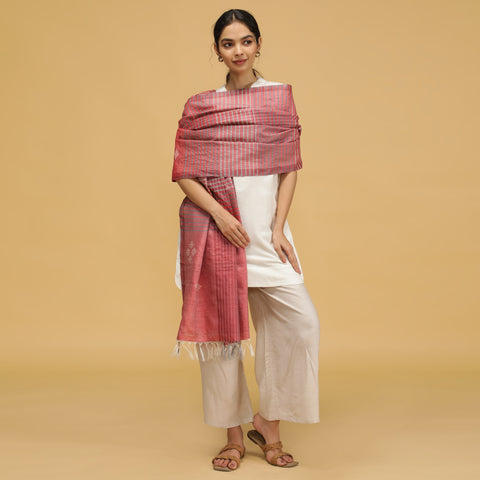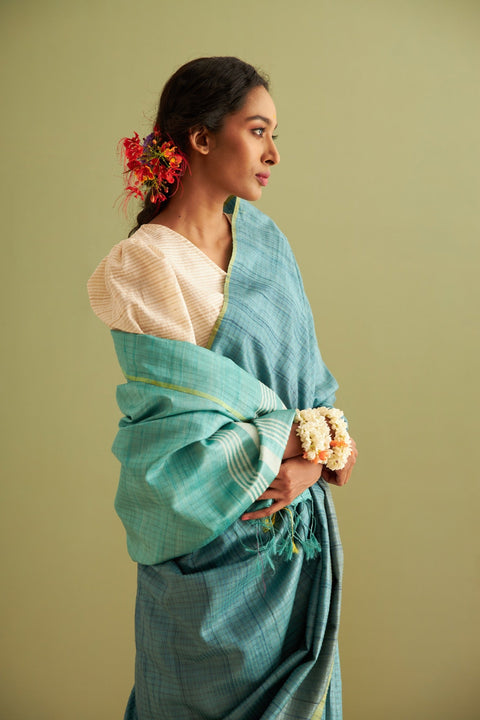
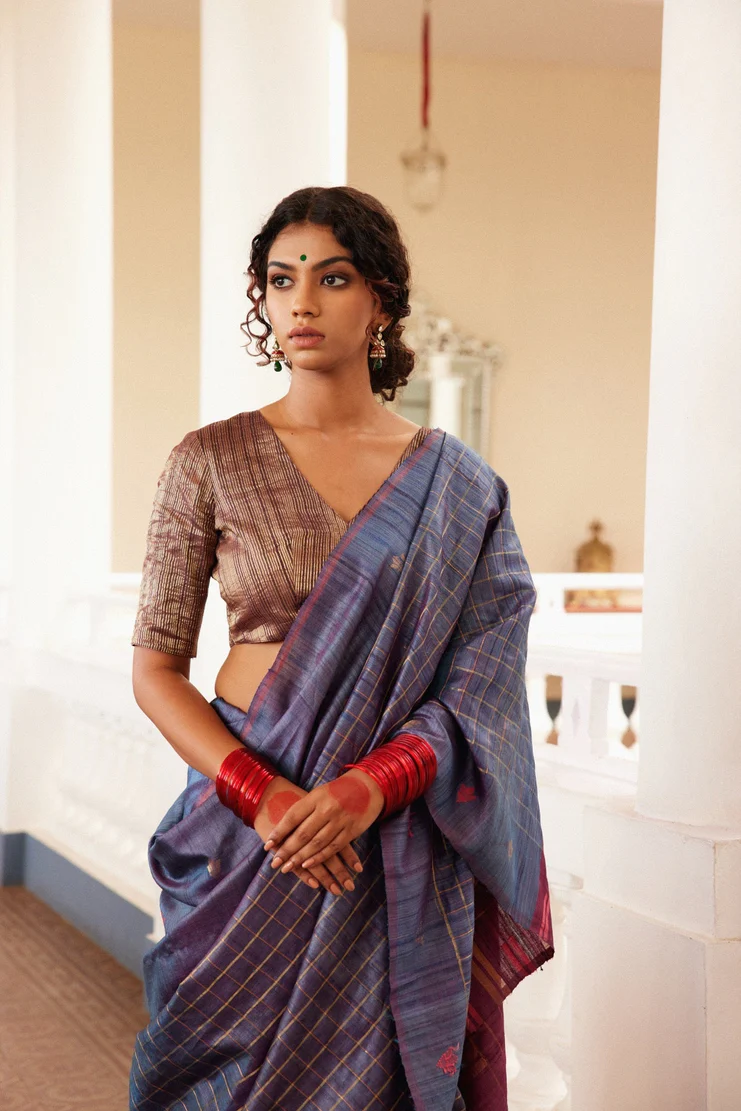
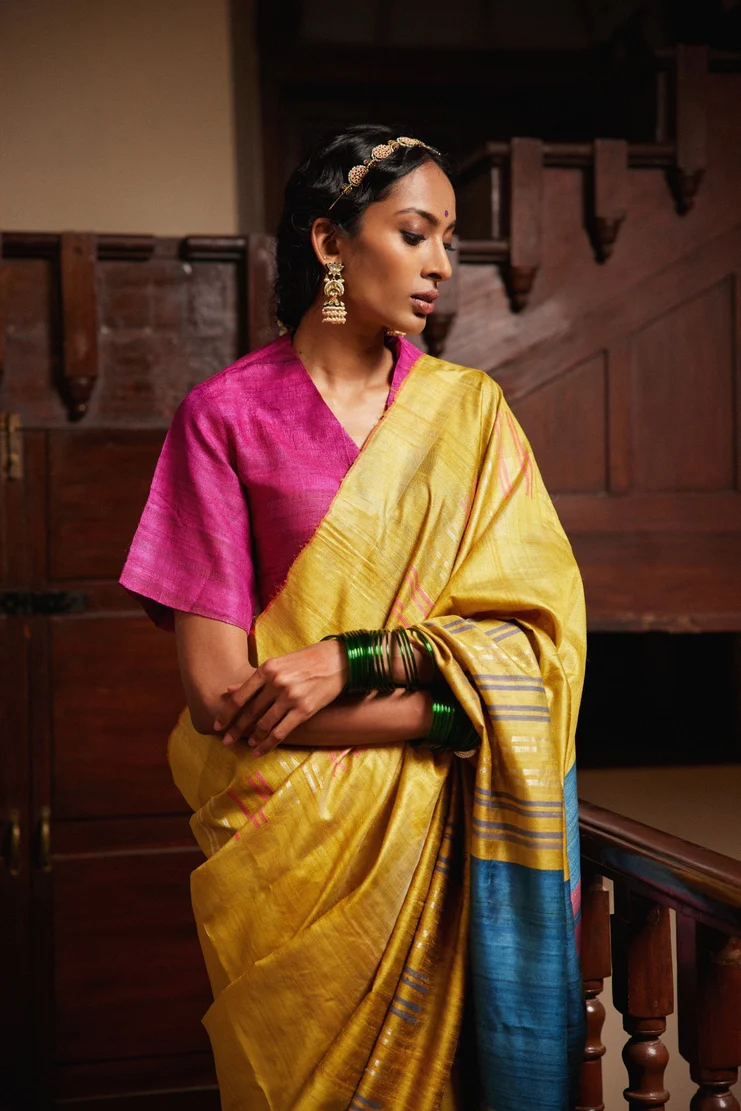
Styling a Kosa Silk Saree for Modern Indian Weddings
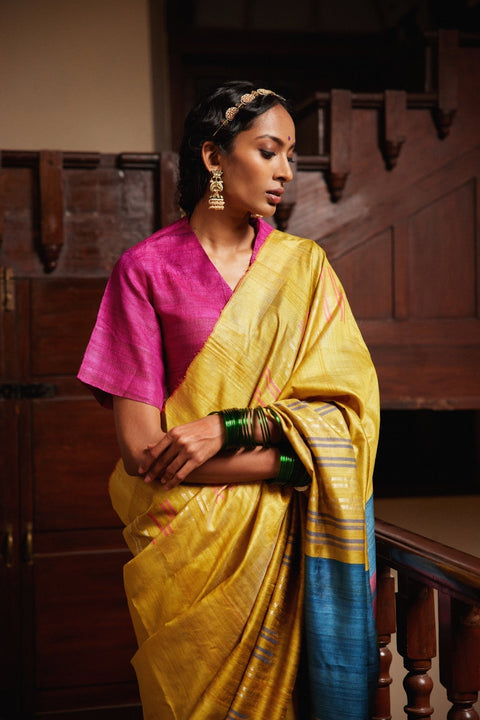
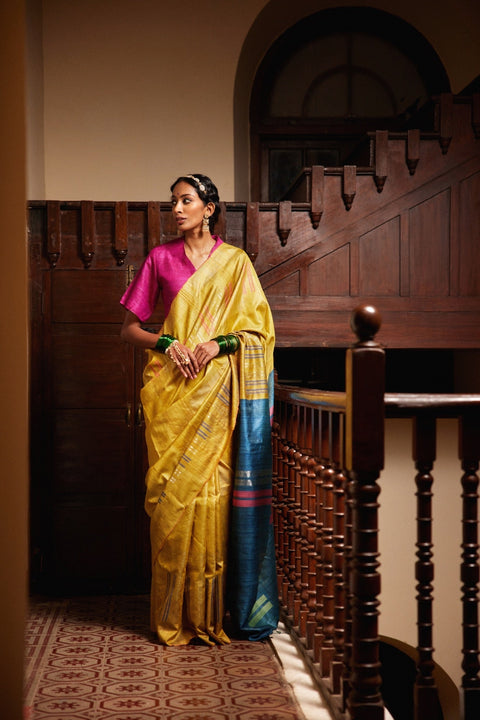
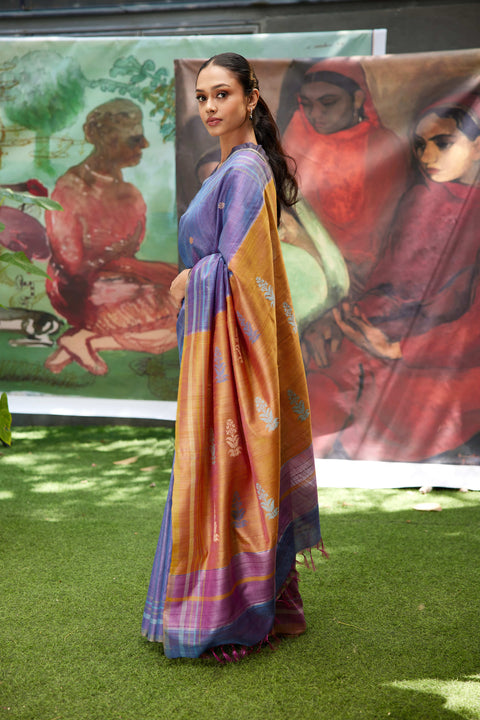
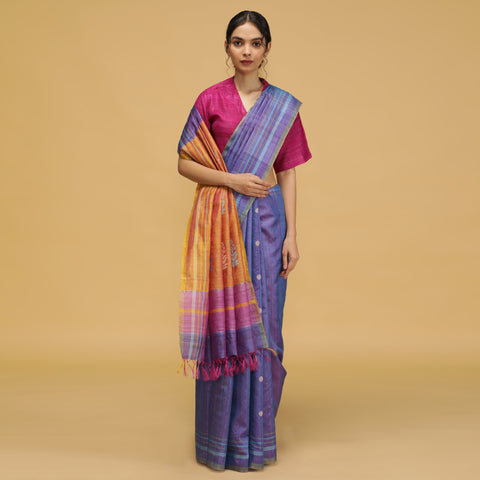
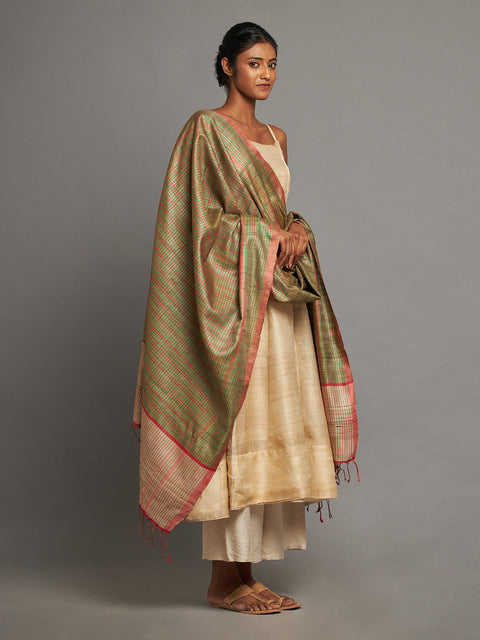
Nothing gets more traditional than a saree. That’s a FACT. And a Kosa silk saree just adds further depth with its rich texture and natural sheen. A variant of Tussar silk sarees, Kosa silk sarees are made with silk produced by the Antheraea mylitta silkworms. This unique silk is known for its coarse texture and natural golden hue, setting it apart from other silks. It is then weaved by the Dewangan tribe, with ancient techniques passed down through the generations. Needless to say, a Kosa silk saree is an invaluable piece of culture.
In recent years, this heritage fabric has made a comeback in the fashion scene, with celebrities like Nita Ambani embracing its elegance. They are becoming a popular choice for Indian brides and wedding guests as well. However, many of these looks have been customized to modern tastes. Let’s look at the different ways you can revamp your Kosa silk saree for a modern Indian wedding.
Choosing the right saree
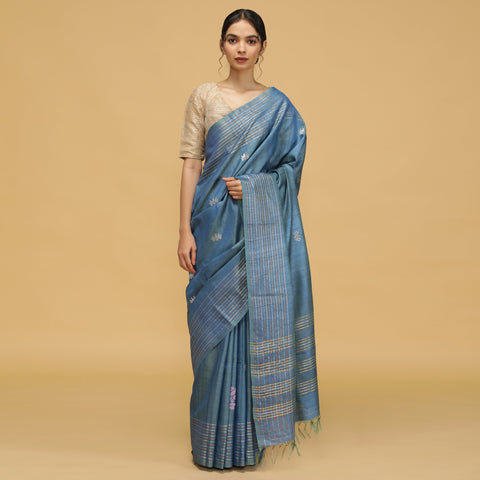
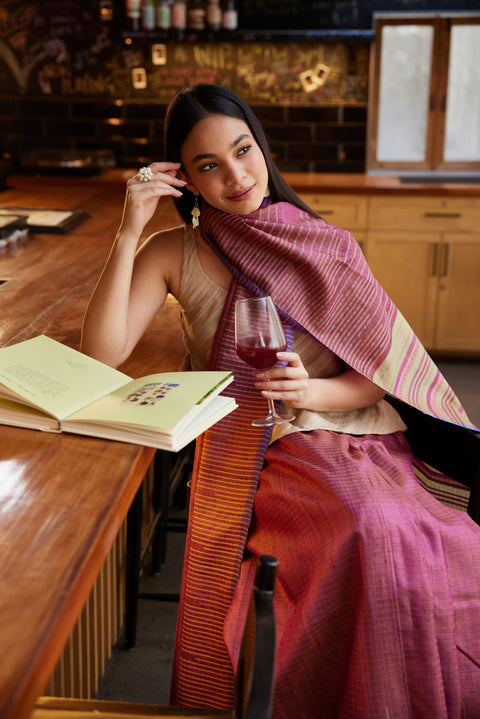
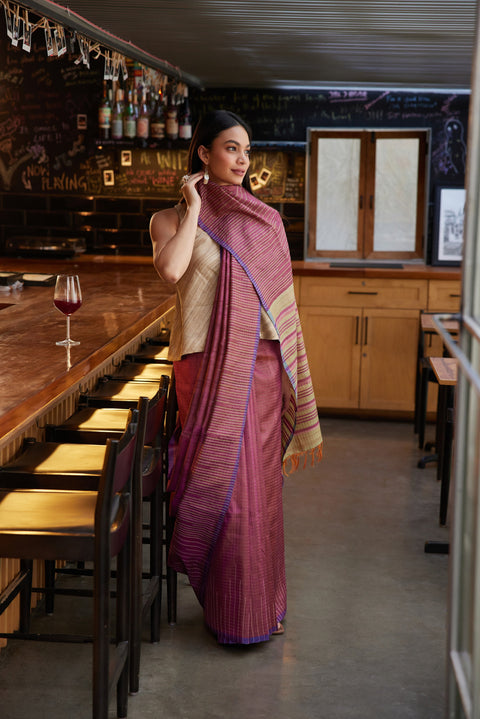
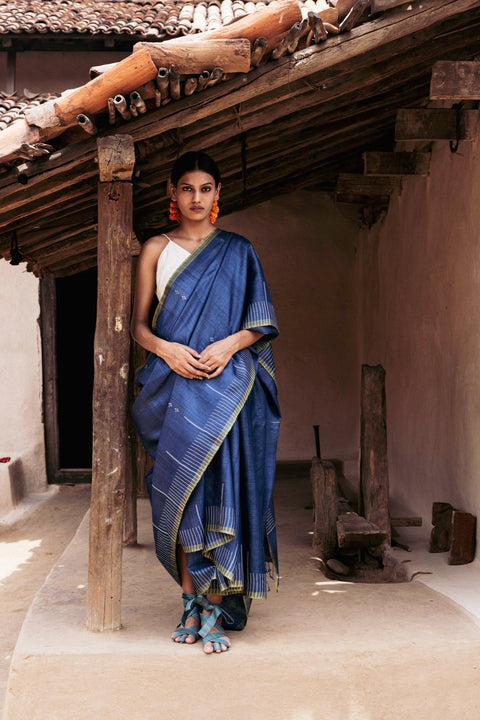
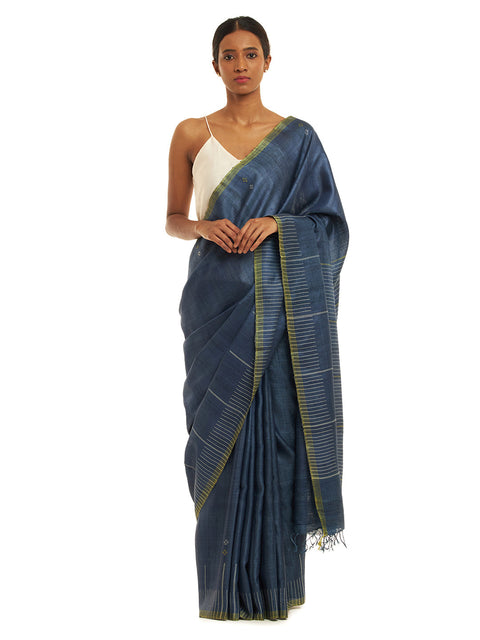
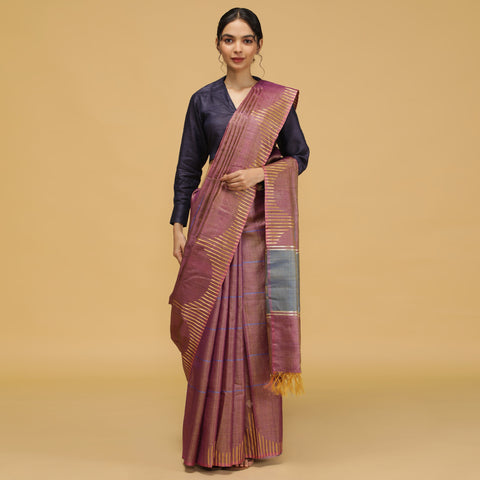
First things first, you need to decide on a saree. While the current trend is all about pastels, you might want to tread carefully with this theme as Kosa silk is known for having naturally warm and earthy tones. Instead opt for more vibrant hues like fuchsia pink, deep green, or royal blue to make a statement. Not only will you stand out, but also be in tune with the celebratory vibe of the wedding.
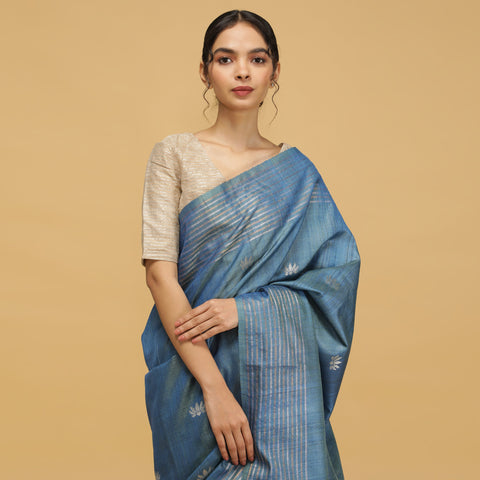
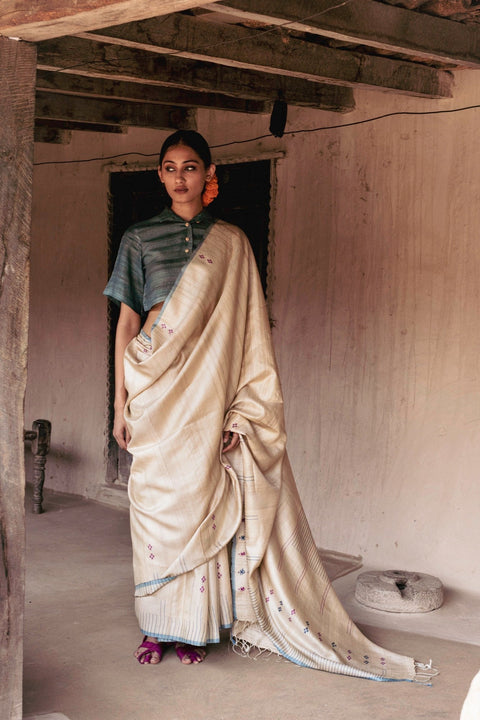
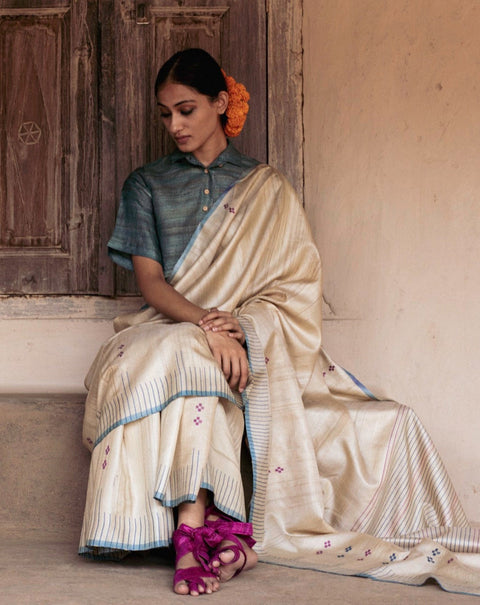
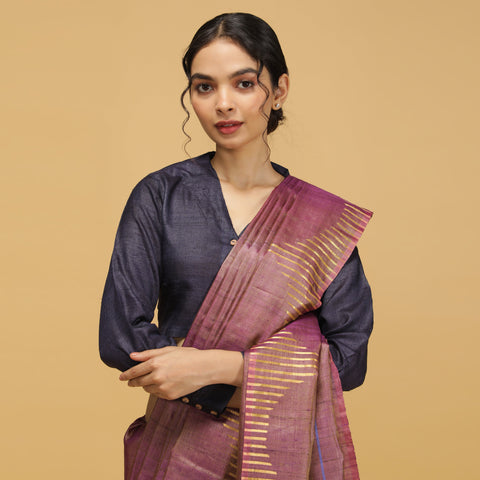
The next step is design elements. Look for sarees with intricate zari work, traditional motifs, or contemporary embellishments. A beige Kosa silk saree with lotus designs and a zari border, for instance, offers a blend of tradition and modernity.
And last but not least pay special attention to the quality of the fabric. Ensure the saree is authentic Kosa silk, preferably with a Silk Mark certification, to guarantee its genuineness and quality.
Modern Draping Techniques
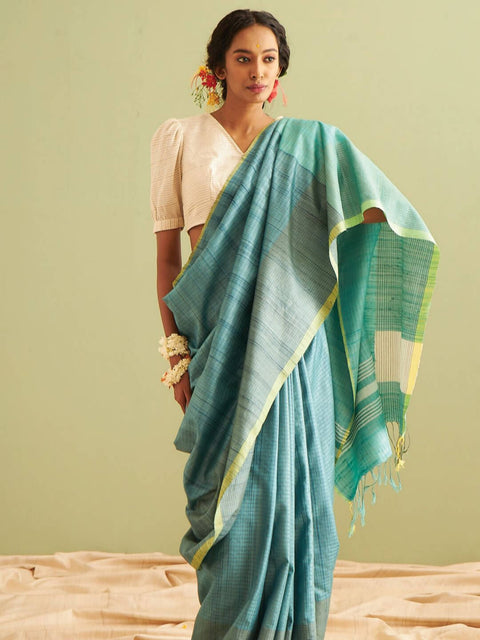
The way you drape a saree can change your entire look and aesthetic. There are several contemporary ways you can drape a saree that offer comfort and a chic silhouette.
Butterfly Drape:
This is a modern variation of the nivi style drape, meant to depict a butterfly’s delicate but beautiful wings. It involves making small pleats at the front as well as pleating the pallu over the shoulder, resembling a butterfly. You could also drape the loose end over both shoulders and pin it in place to portray your wings.
Double Saree Drape:
This style features layering two sarees of contrasting or complementary colors for a dramatic and voluminous look.
Palazzo Saree Drape:
Try pairing your saree with palazzo pants for a fusion fit. This more dapper look is sure to turn heads!
Cape Style Saree Drape:
Another debonair style you could try is by draping the saree with a cape over the shoulder for a more regal and fashionable look.
Pant Style Saree Drape:
This one is more focused on comfort by wearing the saree over fitted pants or leggings. It replaces the traditional petticoat, for ease of movement and a sophisticated appearance.
Contemporary blouse design
A well cut blouse can really elevate your ensemble.
Off-Shoulder Blouses:
Adds a chic yet sassy touch to the traditional saree.
Corset Blouses:
This provides structure and an edgy fashionable look.
Cape or Jacket Style Blouses:
These blouses bring an unusual yet trim twist to your outfit, adding a contemporary flair to the classic saree.
Pro tip: Try pairing your saree with a heavily embroidered blouse. The raw Kosa silk offers a rich texture complimenting the blouse, giving it a luxurious touch.
Accessorise your Look
Now it's time for the supplementary necessities to truly complete your look.
Jewelry:
Opt for statement pieces like choker necklaces, jhumkas, and bangles. Traditional gold jewelry complements the rich texture of Kosa silk, while oxidized silver or beaded jewelry plays into the rustic feel of the saree.
Footwear:
Choose embellished sandals or traditional juttis for comfort and style.
Handbags:
A metallic clutch or embroidered potli bag can complement the Kosa saree, giving it a touch of glamour.
Styling Factors to consider
Wait a minute!…… There are still some minute details we need to sort out first. No major worries, just some little things you need to keep in mind.
Body Type:
By understanding your body type, you’ll have a better idea which blouse and draping method best compliments your figure. Finding the right combination that flatters you certainly goes a long way.
Comfort Level:
You know how long Indian weddings last. Therefore, we advise you to never compromise on comfort. Select styles that you feel comfortable and confident in, ensuring ease of movement and a graceful appearance.
Conclusion
At this point, there can be no doubt that the Kosa silk saree is à la mode with its rich heritage and versatile appeal. Whether you look at it as a bridal silk saree for wedding functions or from the point of view as a wedding guest, these plain tussar silk sarees have become THE indian wedding saree for brides. By experimenting with contemporary draping techniques, innovative blouse designs, and thoughtful accessorizing, you can create a personalized ensemble that honors tradition while embracing modern trends.
We’ll leave you with this - Styling a Kosa silk saree is not just about fashion; it's about draping oneself in a piece of history, celebrating the timeless elegance of Indian heritage.
Choosing the best hairstyle for a saree does more than complete the look. It shapes the silhouette, frames the blouse neckline, and tells the saree whether to stay understated or take the front.
This matters more with handloom and silk sarees. A Kosa silk saree with its matte sheen and natural texture already has depth. The hairstyle needs to work with that - not compete.
Below are 20 saree hairstyles organized by hair length, with occasion, blouse neckline, and accessory guidance for each.
Best Hairstyle for Saree: Quick Reference Table
S.No.
Hairstyle
Hair Length
Best Occasion
Blouse Neckline
Accessories
1
Classic Low Bun
Any
Wedding, puja, reception
Round neck, high neck
Gajra, pearl pins
2
Gajra Bun
Any
Traditional wedding, South Indian ceremony
Round neck, boat neck
Jasmine/rose gajra
3
Soft Messy Bun
Any
Festive lunch, family gathering
Deep V, scoop
Minimal pins
4
French Twist
Any
Formal reception, evening event
High neck, boat neck
Jewelled clip, pearl pins
5
Braided Bun
Any
Wedding, long ceremonies
Round neck, high neck
Gold pins, small flowers
6
Half-Up Half-Down Twist
Any
Day wedding, festive brunch
Deep V, backless, open back
Decorative pin
7
Neat Bob
Short
Office event, casual puja
Boat neck, round neck
Pearl pins
8
Bouffant
Short
Evening function, sangeet
High neck, scoop
Statement earrings
9
Side-Pinned Curls
Short
Cocktail, reception
Deep V, backless
Minimal — let curls speak
10
Half-Up Braid
Short
Casual, daytime festive
Round neck, V-neck
Small florals, oxidised pins
11
Side-Swept Waves
Medium
Daytime event, festive brunch
Any
Small bindi, light earrings
12
Waterfall Braid
Medium
Wedding, bridesmaid look
Round neck, boat neck
Floral pins, hair chain
13
Side Fishtail Braid
Medium
Sangeet, cocktail evening
Deep V, halter
Gold or oxidised pins
14
Messy Side Braid
Medium
Casual, daytime gathering
Round neck, V-neck
Oxidised pins
15
Braided Crown
Medium
Festive evening, mehendi
Boat neck, scoop
Tiny pins or florals
16
Long Straight Braid
Long
Traditional ceremony, puja
Round neck, high neck
Flowers, gold accessories
17
Floral Braid
Long
Wedding, festive function
Round neck, deep V
Fresh jasmine, marigold
18
Sleek Middle-Parted Bun
Long
Evening event, reception
High neck, halter, backless
Matha patti optional
19
Voluminous Pleated Bun
Long
Bridal, grand ceremony
Round neck, high neck
Matha patti, gajra
20
Curly Open Hair
Long
Casual, semi-formal gathering
Scoop, deep V, backless
Hair cuff, minimal pins
Best Saree Hairstyles for Any Hair Length
These five work regardless of how long or short your hair is.
1. Classic Low Bun
The low bun sits at the nape, keeps the face clean, and lets the blouse back, jewellery, and pallu do their work.
Best occasion: Wedding, puja, reception, formal family event
Blouse neckline: Round neck or high neck, the bun draws attention up
Accessories: Gajra, small gold pins, a few pearl hairpins
2. Gajra Bun
A low or mid-height bun decorated with jasmine or rose gajra. Works particularly well with traditional silk sarees for South Indian ceremonies or any occasion where a full classical look is intended.
Best occasion: Traditional wedding, South Indian ceremony, festive puja
Blouse neckline: Round neck or boat neck, which frames the gajra without interrupting it
Accessories: The gajra is the accessory that keeps everything else minimal
3. Soft Messy Bun
A slightly loose bun with a few strands left out to frame the face. This is the easiest option that still looks intentional. Works well with lightweight handloom sarees and earthy textures where the overall look is relaxed.
Best occasion: Festive lunch, family gathering, daytime celebration
Blouse neckline: Deep V or scoop neckline, the soft bun balances the open neckline well
Accessories: Minimal pins only. The hair should look effortless.
4. French Twist
The French twist keeps the neck entirely clear, which makes it ideal for sarees with rich blouse detailing, embroidered backs, or statement necklines. It adds structure without being heavy.
Best occasion: Formal reception, evening event, office celebration
Blouse neckline: High neck or boat neck, the French twist elevates both
Accessories: A jewelled clip at the fold, or pearl pins along the side
5. Braided Bun
A thick braid coiled into a bun. Rich and structured, it holds well through long events and looks traditional with heavy silk sarees and temple jewellery.
Best occasion: Wedding, long ceremonies, reception
Blouse neckline: Round neck or high neck it keeps the focus on the face and jewellery
Accessories: Gold pins, small fresh flowers, or a decorative hairpiece at the base.
Best Hairstyle for Saree Looks for Short Hair
6. Half-Up Half-Down Twist
The crown section is gathered and pinned or lightly twisted, while the rest falls freely. Good for short hair because it gives structure without requiring length.
Best occasion: Day wedding, festive brunch, puja
Blouse neckline: Deep V, backless, or open-back blouse, the hair falling at the sides frames the neckline from behind
Accessories: A small decorative pin or clip at the twist
7. Neat Bob
A clean, straight bob worn as-is with a side or centre part. One of the easiest short-hair options. Works for day functions where you want the saree to be the full focus.
Best occasion: Office event, casual puja, college saree day
Blouse neckline: Boat neck or round neck - complements the clean, graphic line of the bob
Accessories: Pearl pins or small studs; avoid anything large that competes with the bob's simplicity.
8. Bouffant
Volume at the crown with the sides pinned or smoothed back. Adds height, sharpens features, and works well for short hair at evening events where a fuller silhouette is needed.
Best occasion: Evening function, sangeet, cocktail
Blouse neckline: High neck or scoop, the volume at the top balances the blouse's structure
Accessories: Statement earrings; the bouffant has volume, so keep accessories bold and short.
9. Side-Pinned Curls
Short hair curled and pinned to one side, leaving the other side open. Adds movement and works well with deep-neck or backless blouses because it frames the neckline from the front.
Best occasion: Cocktail, reception, evening gathering
Blouse neckline: Deep V or backless, the pinned side draws the eye and highlights the neckline
Accessories: Keep jewellery minimal; the curls carry the look.
10. Half-Up Braid
The crown section braided and pinned back, the rest of the hair loose. A youthful, practical option for short hair at daytime events.
Best occasion: Casual function, daytime festive, haldi
Blouse neckline: Round neck or V-neck.
Accessories: Small floral pins or oxidised pins at the braid.
Best Hairstyle for Saree Options for Medium Hair
11. Side-Swept Waves
Soft waves swept to one side. Works for medium hair worn open but styled. Adds movement without making the look feel heavy. Good choice for daytime sarees with simple borders where you want a relaxed but put-together finish.
Best occasion: Daytime event, festive brunch, intimate celebration
Blouse neckline: Any waves work with almost all necklines
Accessories: Small bindi, light drop earrings; the waves should not be overshadowed
12. Waterfall Braid
Strands braided from one side, with the rest of the hair falling through in a cascade. Romantic and elaborate, it suits medium hair at wedding functions.
Best occasion: Wedding, bridesmaid look, reception
Blouse neckline: Round neck or boat neck, the braid works best when the neckline is clean
Accessories: Floral pins along the braid, or a delicate hair chain
13. Side Fishtail Braid
A fishtail braid pulled to one shoulder. More intricate than a regular braid, it looks polished without being too formal. Works well with party wear silk sarees.
Best occasion: Sangeet, cocktail evening, festive dinner
Blouse neckline: Deep V or halter, the braid falling forward frames the neckline
Accessories: Gold or oxidised pins woven into the braid
14. Messy Side Braid
A loose braid pulled to one side, slightly undone. Feminine and relaxed, good for lighter handloom sarees where the look should feel natural.
Best occasion: Casual function, daytime gathering, outdoor event
Blouse neckline: Round neck or V-neck, keeps the look balanced
Accessories: Oxidised or floral pins; avoid heavy gold which will look too formal
15. Braided Crown
Two sections braided from either side and pinned across the top of the head. Festive and neat, it keeps hair off the face entirely while still looking styled.
Best occasion: Festive evening, mehendi, haldi
Blouse neckline: Boat neck or scoop, both complement the crown's full-face exposure
Accessories: Small pearl or floral pins along the crown
Best Hairstyle for Saree Looks with Long Hair
16. Long Straight Braid
A classic three-strand braid from the nape down. The most traditional of all saree hairstyles, it pairs well with pure Kosa silk sarees and heavy temple jewellery. The braid should fall over one shoulder for a cleaner pallu drape.
Best occasion: Traditional ceremony, puja, family function
Blouse neckline: Round neck or high neck keeps the look classical
Accessories: Jasmine flowers threaded through, or gold hair accessories at the end
17. Floral Braid
A regular braid decorated with fresh flowers woven in or pinned along its length. Works especially well with handloom sarees in earthy or pastel tones where the flowers add colour without jewellery.
Best occasion: Wedding, festive function, outdoor celebration
Blouse neckline: Round neck or deep V either works, the flowers carry the styling
Accessories: The flowers are the accessory; skip heavy earrings or use small studs
18. Sleek Middle-Parted Bun
Hair parted cleanly in the centre and pulled into a low or mid bun. Polished and modern. Works well with structured blouses and contemporary drapes. This is the right choice when the saree is heavily detailed and the hair should step back.
Best occasion: Evening event, reception, formal occasion
Blouse neckline: High neck, halter, or backless, the clean centre part frames each
Accessories: Matha patti optional; otherwise keep completely minimal
19. Voluminous Pleated Bun
A large, structured bun built with volume and often using a bun maker or padding. Grand and traditional, this is a bridal staple for a reason. It adds height and formality.
Best occasion: Bridal wear, grand ceremony, reception
Blouse neckline: Round neck or high neck, the height of the bun needs grounded necklines
Accessories: Matha patti, gajra, or decorative flowers; this hairstyle can carry more
20. Curly Open Hair
Long hair worn open with natural or styled curls. Works for long hair when the occasion is semi-formal or casual. For a silk saree, keep the curls defined and controlled; for a cotton handloom saree, loose curls work better.
Best occasion: Casual function, semi-formal gathering, festive brunch
Blouse neckline: Scoop, deep V, or backless, open necklines let the hair sit naturally
Accessories: A small hair cuff or minimal pins to keep curls from falling on the face
How to Make Your Saree Hairstyle Last Longer
The best hairstyle for a saree is one that still holds three hours in. These tips help:
Apply a light mousse before styling for grip and volume
Use a setting spray on curls and waves before they cool down not after
Criss-cross bobby pins for a stronger hold in buns and braids
Carry 3–4 extra matching pins in your clutch for mid-event fixes
Avoid touching the hair once it is set; handling loosens curls and flattens volume
If the occasion runs into humidity, use a light waterproof hairspray on the surface
For braids in warm weather, tie the braid slightly tighter than you think you need, it will loosen naturally
What to Look for in a Handloom Saree to Pair With Your Hairstyle
A hairstyle changes with the saree it is paired with. A heavily bordered Kosa silk saree needs a quieter hairstyle, a low bun or sleek braid. A softer handloom saree in an earthy tone can carry side-swept waves or a loose braid.
Kosala weaves Kosa silk on pit looms in Chhattisgarh, the matte sheen and natural slub of the fabric means it photographs well without a glossy blow-dry finish. A clean, simple hairstyle reads as intentional next to that texture, not understated.
For wedding occasions, the wedding silk sarees carry enough detail that a braided bun or low gajra bun is the right balance. For festive or evening functions, the party wear silk sarees work equally well with a sleek middle-parted bun or a side fishtail braid.
If you are choosing a blouse neckline alongside your hairstyle, blouse design for Kosa sarees covers what to consider for each occasion. For a fuller picture of how hair, drape, and styling interact, how to look slim in a saree walks through the complete silhouette.
Conclusion
A saree hairstyle is not a finishing touch. It is part of the silhouette. The low bun that grounds a heavy silk saree, the loose braid that lets a handloom breathe, the sleek bun that steps back so a richly bordered pallu can step forward each is a considered decision.
Matching the hairstyle to the hair length, the blouse neckline, and the saree's weight makes the difference between a look that works and one that holds.
Best Hairstyle for Saree: Frequently Asked Questions
1. Which hairstyle suits short hair with a saree?
Short hair works well with a neat bob, bouffant, half-up braid, or side-pinned curls. Kosala sarees in lighter handloom textures pair especially well with a clean bob or soft bouffant.
2. Which hairstyle looks best with a silk saree?
A classic low bun, gajra bun, or sleek braided bun works best with a silk saree. These hairstyles highlight the pallu and blouse without competing with the saree's texture or border.
3. Can I wear my hair open with a saree?
Yes. The side-swept waves, defined curls, or a half-up style work better than fully open hair. They look styled, frame the neckline, and hold better through a long event.
4. What is the best hairstyle for a saree?
The best hairstyle for a saree depends on hair length and occasion. Low buns and braids work for traditional silk sarees; side-swept waves and messy buns suit lighter handloom sarees and daytime events.
5. How to choose a hairstyle based on my blouse neckline?
High neck and boat neck blouses work best with tied-up hairstyles - buns, French twists, or braids. Deep V, backless, and halter necklines work better with waves, side braids, or open hair that frames the front.
For women searching for saree colours for dark skin tone, the answer is rarely about what you can't wear. It is about understanding why certain shades amplify your complexion while others fall flat.
Dark skin tones have higher melanin concentration, which means they reflect and absorb light differently. Saturated, warm, and deeply pigmented colours work with that natural depth. Pale, muted shades absorb into the skin rather than contrast against it, making the overall look feel flat.
This guide covers the colours that work, the ones to skip, what your undertone changes, and how fabric affects all of it.
Why Do Some Saree Colours Flatter Dark Skin Tones More?
Colour contrast is the core principle. When a deeply pigmented shade sits against melanin-rich skin, it creates a visual balance that reads as radiant and intentional. Lighter or dusty shades don't create that contrast and flatten the look instead.
Your undertone matters here too. Warm undertones (golden or yellow-leaning) respond better to reds, mustard, and earthy oranges. Cool undertones (pink or bluish-leaning) look sharper in teal, fuchsia, and jewel tones. Undertone does most of the work here regardless of how deep your complexion runs, which is also true for dusky skin tones.
What Are the Best Saree Colours for Dark Skin Tone?
Ruby Red and Deep Maroon
Ruby red creates sharp contrast against deep skin and catches light well in both indoor and outdoor settings. Maroon leans warmer and works particularly well for weddings and festive occasions. Pair either with a gold or antique brass blouse to extend the warmth.
Emerald and Forest Green
Emerald has the saturation to hold its own against deep skin without competing with it. Forest and bottle greens work the same way: grounded enough to contrast cleanly, but not harsh. These are strong picks for receptions and evening ceremonies. Emerald and forest green Kosa silk sarees carry the colour particularly well given the fabric's natural matte finish.
Royal Blue and Sapphire
Royal blue makes deep skin stand out without altering its natural tone, which is why it is one of the most reliable saree colours for dark skin tone. Sapphire is especially effective under artificial lighting at sangeets and receptions. Pair with silver or oxidised jewellery to keep the cool tone intact.
Mustard Yellow and Golden Yellow
Mustard's warm, earthy undertone sits in direct harmony with golden-brown skin and creates a glow that brighter yellows cannot. Golden yellow is particularly well suited to daytime functions like haldi and Diwali. See yellow colour silk sarees for Kosa silk.
Magenta and Plum Purple
Magenta sits between red and violet, and since both flatter dark skin, it earns its place on this list. It holds contrast well in photographs and reads as a complete look even with minimal jewellery. Plum and deep purple are the stronger picks for formal occasions.
Which Saree Colours Should Dark Skin Tones Avoid?
Very pale pastels without contrast borders: blush pink, powder blue, and mint without a strong border or zari edge lose definition against deep skin.
Ash grey and dusty beige: these absorb into warm undertones rather than reflecting off them.
Ivory or off-white in plain weaves: this works only when paired with a bold border or contrast zari. Plain off-white on its own will flatten the look.
Very dark charcoal solids: these reduce visible contrast between the saree and skin, especially in photographs.
When in doubt, go deeper and brighter rather than lighter and softer. The same contrast logic that governs shade selection also applies to saree colour combinations.
Does Fabric Change How Colour Looks on Dark Skin?
High-sheen fabrics like organza or heavy brocade reflect light outward and can read as vivid but sometimes harsh. Matte-finish fabrics like Kosa silk and Tussar hold colour closer to the body and diffuse it evenly. Saturated colours appear richer and more settled on darker skin in matte-finish fabrics. If you are choosing silk sarees colours specifically, the matte-to-colour relationship becomes the main factor worth understanding before you buy.
Conclusion
At Kosala, every saree is handwoven from pure Kosa silk by artisans in Chhattisgarh. The fabric's natural matte finish and warm golden undertone make it a well-suited choice for dark and dusky skin tones. The colour holds true under different lighting and the drape sits clean without excess sheen. Browse the full handloom collection to find shades in emerald, ruby, mustard, magenta, and royal blue, all woven to carry colour at the depth that flatters deep Indian skin tones.
Saree Colours for Dark Skin Tone: Frequently Asked Questions
1. Is dark skin tone the same as dusky skin tone when choosing saree colours?
Not exactly. Dusky skin typically has warm or neutral undertones, while dark skin tones can vary more widely in undertone direction. Both benefit from saturated colours, but the undertone and not the label is what determines the most flattering shade.
2. Can pastels work for dark skin tones?
Pastels without contrast elements generally fall flat. If you want to wear a lighter shade, choose one with a bold zari border, a contrast pallu, or a strongly coloured blouse. The contrast compensates for what the body colour lacks in saturation.
3. Do metallic borders suit dark skin tones?
Gold and antique brass borders work very well with warm-toned shades like ruby red, maroon, and mustard. Silver borders pair better with cool-toned sarees in royal blue, sapphire, and magenta. Both add contrast at the edges, which helps define the drape against deep skin.
4. How does fabric affect how colour looks on dark skin?
Matte-finish fabrics like Kosa silk and Tussar hold colour more evenly and prevent over-reflection. This makes saturated colours appear richer and more controlled on darker skin tones compared to high-sheen fabrics that can look harsh in certain lighting.
5. Should jewellery colour match the saree for dark skin tones?
Not necessarily. Contrast jewellery often works better. Gold or antique brass with warm sarees, silver or oxidised with cool-toned sarees. The goal is to keep the attention on the face, and jewellery that contrasts rather than blends achieves that more reliably.
6. Which saree colour is best for a dark-skinned bride?
Ruby red, deep maroon, emerald green, and royal blue are the most reliable bridal choices. Magenta and plum work well for mehendi and reception looks. Mustard yellow is a strong pick for daytime pre-wedding ceremonies like haldi.
A good farewell saree look starts with comfort, movement, and photographs. It should hold shape while you sit, walk, stand on stage, and meet people.
For farewells, choose a fabric that has a body without feeling heavy. Kosa silk works well here because its natural slub, matte sheen, and textured hand help the drape stay neat without looking too formal.
What Saree Fabric Works Best for Farewell?
Not every saree fabric behaves the same through a long event. Choose by timing, movement, and how much adjustment you can manage.
Saree type
Best for
What to know
Kosa silk
Daytime and formal evening farewells
Holds pleats neatly, has a matte finish, and gets softer with wear
Chiffon
Dance-heavy evening events
Light and fluid, but needs more pinning
Georgette
Casual or outdoor farewells
Easy to move in, but less structured
Organza
Short evening events
Crisp in photos, but can feel stiff
Satin
Party-style events
Glossy finish reflects strong light
For college events that move from ceremony to photographs to dinner, a lighter handloom holds up better than a heavy party saree. Sarees for college girls are built around this need, with pieces weighted for full-day wear rather than a single evening.
Which Colour Works for a Farewell Saree Look?
Colour should be chosen by event light first, then by personal comfort. A shade that looks good in daylight may behave differently under indoor lighting.
For morning or afternoon farewells:
Sage green
Dusty rose
Warm ivory
Muted teal
Soft peach
For evening farewells:
Deep emerald
Royal blue
Burgundy
Warm terracotta
Ink blue
Kosa silk has a matte surface, so colour reads softer than it does on high-shine satin. If you want a colour that stays calm under flash, a blue saree for farewell is often safer than a very bright red or neon pink.
A farewell outfit works best when it stays steady through movement and clear in photographs.
What Blouse Style Should You Choose?
The blouse decides whether the saree looks balanced from the front, side, and stage photographs. Keep the neckline clean and the sleeves easy to move in.
Good blouse choices:
Sleeveless: best for warm venues and long wear
Cap sleeve: neat without feeling too covered
Boat neck: works well when the pallu is visible
Square neck: adds structure to softer fabrics
Elbow sleeve: useful for formal office farewells
Avoid very high necks and tight full sleeves if the event includes dancing, long sitting, and repeated photographs. Neckline choice changes how the pallu sits. A boat neck works well when the pallu is meant to stay visible, while a square neck gives softer fabrics a cleaner frame; blouse design for saree can help you match the cut to the drape.
How Do You Keep the Saree in Place?
A secure saree is not about using many pins. It is about placing the few pins correctly.
Use this order:
Tie the petticoat firmly before draping.
Set the first tuck slightly above the natural waist.
Keep front pleats narrow and even.
Tuck pleats at a slight inward angle.
Pin the pallu at the inner shoulder seam.
Add one waist pin only if the fabric feels slippery.
Textured fabrics help because they do not slide as easily as smooth satin. Kosa silk's natural slub is particularly useful here.If you are draping without help on the day, silk saree draping styles can help you place the pleats, secure the pallu, and keep the fall clean.
What Accessories Work Without Looking Overdone?
Choose one focal point. A farewell saree already carries the emotion of the day, so accessories should support the look, not compete with it.
If your saree has a detailed border:
Wear small jhumkas or studs.
Keep the neck bare.
Choose one slim bangle or none.
If your saree is plain:
Add one slim necklace.
Choose earrings that match the blouse tone.
Keep the wrist simple.
For footwear:
Block heels work for indoor halls.
Wedges work for lawns.
Flats work if the venue has stairs or uneven flooring.
Carry a small kit with safety pins, fashion tape, blotting paper, and one spare earring back. These small things matter more than adding another accessory.
Should You Buy or Rent a Farewell Saree?
Buy when the saree can be worn again. Rent when the look is heavily embellished and unlikely to suit another occasion.
Kosa silk fits the first choice because it gets softer with wear while keeping its structure. The same saree can work later for an office farewell, family dinner, reception, or formal ceremony.
The same logic applies to any milestone event with a stage moment. A lighter, textured handloom sits better in photographs than a dense shimmer fabric, and the saree for graduation day weaves reflect that.
How Kosala Thinks About a Farewell Saree Look
At Kosala, the focus stays on Kosa silk, a Tussar variety known for its natural slub, matte sheen, and textured hand. These details are part of the weave, not surface decoration.
Many Kosala sarees are woven on pit looms, where the weaver controls tension, border alignment, and pallu balance by hand. This gives the saree a structured fall without making it feel stiff.
For a farewell, that matters because the saree should move with you and still look composed by the end of the day. A good drape should feel wearable after the photographs are done.
Farewell Saree Styling Frequently Asked Questions
What is the best saree fabric for a college farewell?
Kosa silk, chiffon, and lightweight georgette work well. Choose Kosa silk for structure, chiffon for dancing, and georgette for easy movement during casual or outdoor farewell events while staying neat.
Which colour saree is best for a farewell?
Soft shades work well in daytime, while deeper jewel tones suit evening light. Choose sage, ivory, teal, emerald, royal blue, or burgundy based on venue lighting, comfort, and photo clarity.
How do I keep my saree pleats in place while dancing?
Pin the pallu at the inner shoulder seam, tuck pleats slightly inward, and choose a textured fabric. Kosa silk grips better than very smooth satin or chiffon during quick movement.
What blouse style looks best for a college farewell?
Sleeveless, cap sleeve, boat neck, square neck, and elbow sleeve blouses work well. Avoid tight high necks or full sleeves if the event includes dancing, long sitting, and repeated photographs.
Should I rent or buy a saree for farewell?
Buy if the saree can work for future events. Rent if you want a heavily embellished piece for one evening only. Rewear value should guide the decision after the farewell day.