

Yellow is often the shade people hesitate to wear. Will it feel too bright? Which blouse will work with it? Will it suit me?
But it brings plenty of character. It has the warmth of gold, the depth of ochre, and enough colour to make even a simple drape feel considered. A mustard colour silk saree gives you more room to experiment. The key is choosing the right depth of colour, fabric texture, and blouse pairing.
This blog looks at why mustard holds up so well as a bold choice, and what changes once you understand the fabric behind the colour.
Why Mustard Reads as Bold, Not Loud
Mustard sits in an odd spot on the colour wheel. It's warm and saturated enough to stand out in a room, but it doesn't carry the intensity of a true red or the coolness of a jewel-toned blue. That's what makes a mustard colour silk saree feel bold without feeling like a statement you have to defend.
Warmth without aggression: mustard leans golden-brown rather than pure yellow, so it reads rich instead of sharp
Works across seasons: it photographs well in both daylight and warm indoor lighting, unlike brighter yellows that can look flat under tungsten light
Pairs easily: mustard sits close enough to gold, rust, and brown that jewellery and blouse pairing rarely goes wrong
In practice, mustard does what a bold colour is supposed to do, hold attention, without the styling effort a brighter shade usually demands.
Where Can You Wear a Mustard Silk Saree?
Mustard easily lends itself to celebrations, but the styling decides how formal it feels.
For a daytime wedding, try an ivory blouse, earrings and a relaxed pallu. For an evening gathering, switch to wine or green and add a more defined jewellery piece.
For a cultural event or family lunch, a plain blouse and neat pleats can make the same saree feel less elaborate.
A yellow saree also fits many haldi dress codes. However, turmeric and oils can stain silk. If you expect direct contact with them, save your silk saree for another part of the celebration.
The Fabric Detail That Changes Everything
It is better to know how to identify a pure silk saree, before buying one. The fabric matters more than the shade.
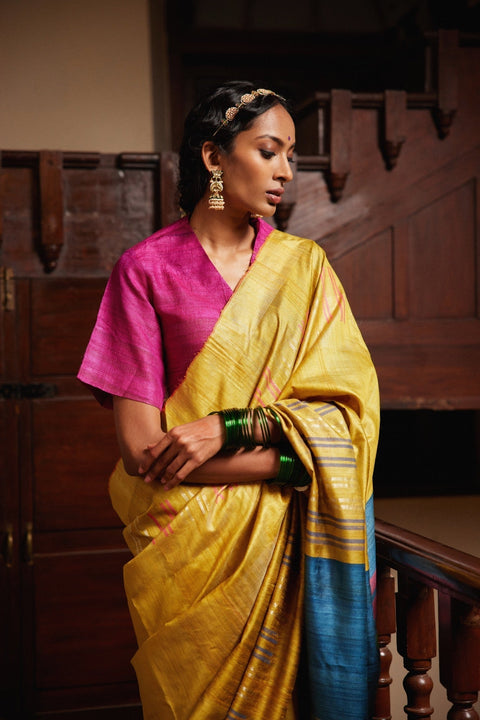
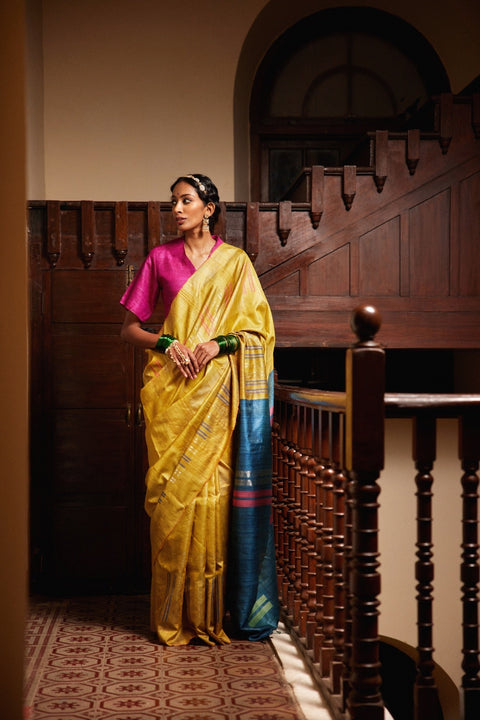
On a smooth silk, mustard can look close to synthetic with little depth. On a handloom Kosa silk saree, the same shade of mustard picks up warmth from the fabric's natural slub and matte sheen. The colour doesn't just sit on the surface, it moves with the weave.
Weight matters: a lighter weave drapes closer to the body and lets mustard look softer rather than stiff
Slub matters: the natural texture in Kosa silk breaks up the solid colour so it doesn't look one-dimensional
Finish matters: a matte sheen holds mustard's warmth better than high-gloss silk, which can push it toward a harsher, more synthetic yellow
This is why two sarees in the "same" mustard shade can look completely different once you actually see them in person, the fabric is doing as much work as the dye.
Does Mustard Suit Every Skin Tone?
Mustard can work across different skin tones. It is a forgiving color than most people assume once you know where it sits against different undertones.
Warm undertones: mustard sits naturally close to warm skin, making it one of the easier bold colours to wear
Cool undertones: a slightly deeper, more muted mustard works better than a bright, high-saturation version, which can look harsh against cooler skin
Deeper skin tones: rich mustard tends to hold its depth well and photographs strongly, similar to how certain saree colours for dark skin hold up better under flash or daylight
Olive undertones: mustard blends in easily here, often looking like it was made for this undertone specifically
Deeper mustard can create a striking contrast against darker skin, while softer versions may appeal if you prefer less contrast. Personal preference matters more than a fixed skin-tone chart.
How to Style a Mustard Silk Saree
Mustard works harder than people expect because it doesn't need much help from accessories.
Keep the blouse tonal in a deeper brown or rust, or contrast with ivory or cream for a daytime look
Gold jewellery is the obvious pairing, but oxidised silver works surprisingly well against mustard's warmth too
Skip heavy embellishment on the saree itself, mustard already carries enough visual weight on its own
For festive occasions, a textured mustard Kosa silk needs far less styling effort than a flat, printed version in the same shade
The more textured the fabric, the less you need to do around it. A flat mustard synthetic often needs heavier jewellery or a contrast blouse to avoid looking plain.
A mustard silk saree becomes one of the easier bold choices to wear well, for weddings, festive days, or styled the modern way for everyday occasions.
What to Look for in a Mustard Kosa Silk Saree
The weave of a mustard colour silk saree matters too while holding its warmth through the day and photographs consistently.
Kosala works with handloom Kosa silk, where natural slub and matte sheen keep mustard from tipping into a flat or synthetic-looking yellow. The texture is what lets this bold shade stay wearable rather than overwhelming, the same quality that defines why Kosa silk sarees are a must-have for weddings.
Mustard isn't bold because it's loud, it's bold because it holds attention quietly.
Finding Your Mustard Colour Silk Saree
A mustard colour silk saree brings warmth and character to your wardrobe.
Yellow covers more ground than most colour descriptions suggest. Lemon yellow looks fresh and light. Marigold feels bright and celebratory. Mustard sits deeper, with an ochre or brownish quality that gives it a more grounded appearance.
Choose a shade you enjoy and feel comfortable to carry. With a simple drape and a few thoughtful accessories, it can work just as well for a family gathering as a festive celebration.
Frequently Asked Questions About Mustard Colour Silk Saree
Q: Is mustard a hard colour to pull off in a saree?
Not really. Mustard is more forgiving than brighter yellows because it leans warm and muted rather than sharp, which makes it work for most undertones.
Q: Does mustard look different on silk versus other fabrics?
Yes. A textured, handloom weave like Kosa silk holds mustard's warmth better than a smooth, glossy synthetic, which can push the same shade toward a harsher yellow.
Q: What blouse colours work best with a mustard saree?
Deeper tonal shades like brown or rust create a grounded look, while ivory or cream works well for a lighter, daytime contrast.
Q: Can mustard be worn for weddings, or is it more casual?
Mustard works for both. A richer, deeper mustard with minimal embellishment suits festive and wedding occasions, while a lighter shade works for everyday wear.
Q: Does mustard suit cooler skin tones too?
Yes, though a slightly muted or deeper mustard tends to look better on cooler undertones than a very bright, high-saturation version.
Learn More