Knowing how to choose kurta colors for men based on their skin tone comes in handy at some point. Read more to know how these tones can complement your skin.
Learn More

Drawer menu

Pure silk is a protein fibre that behaves differently from synthetic fabric in specific, testable ways. If you know what to look for, you can spot a pure silk saree in under two minutes even inside a shop, even without burning a thread.
|
Test |
Pure Silk |
Fake Silk |
|
Touch |
Soft, slightly warm, faint texture |
Cold, slippery, no warmth |
|
Sound |
Faint rustling (scroop) when rubbed |
Silent or flat swishing |
|
Burn |
Smells like burnt hair, powdery ash |
Smells like plastic, hard bead |
|
Sheen |
Colour shifts when tilted |
Flat, uniform shine |
|
Drape |
Soft, controlled fall; holds structure |
Slumps or stays stiff |
|
Water |
Absorbs a drop quickly |
Beads up or rolls off |
|
Zari |
Red silk core under scratch |
White or plastic thread under scratch |
|
Weight |
Natural heft from fibre density |
Too light or oddly dense |
Hold the fabric for 5–10 seconds. Pure silk warms slightly because it is a protein fibre. It feels smooth but not slippery, with a faint texture from the natural filament. Fake silk stays cold and often feels slick. Kosa silk, made from the Antheraea mylitta silkworm in Chhattisgarh, has a slightly more textured hand than mulberry silk. Its natural slub is a characteristic of the fibre, not a defect.

Bunch the fabric gently and release it. Pure silk produces a faint rustling called the scroop effect, caused by the triangular cross-section of silk filaments. Synthetic fabric is either silent or produces a flat swishing sound with no depth.
Pull one or two threads from a hidden edge and burn them carefully. Pure silk burns slowly, self-extinguishes, smells like burnt hair, and leaves powdery dark ash you can crumble between your fingers. Fake silk catches quickly, keeps burning, smells like plastic, and leaves a hard bead. This test is best used at home on a saree you already own.

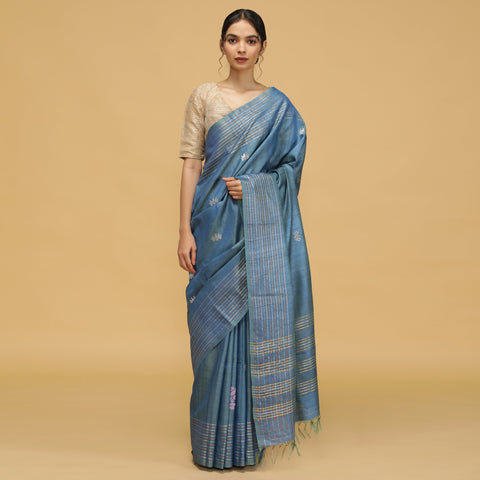
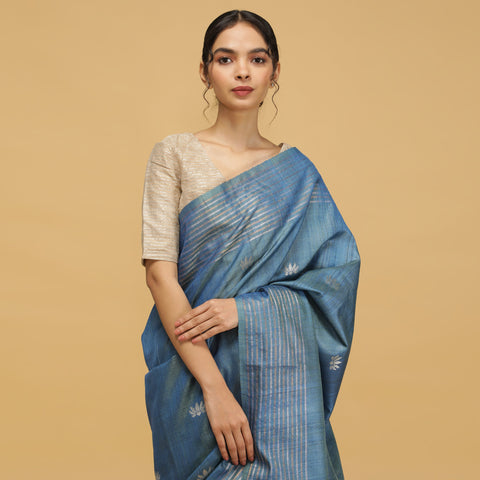
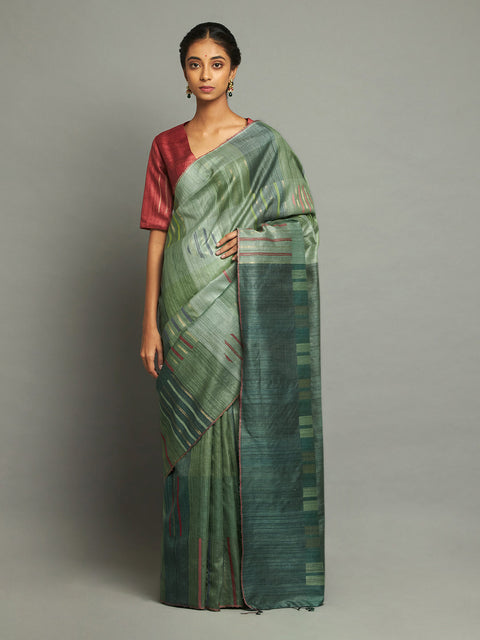
Tilt the fabric at different angles under light. Pure silk shifts colour as the angle changes as red may look burgundy from one side, rust-orange from another. This is called dual-tone reflection. Synthetic silk has a flat, uniform shine regardless of angle. Kosa and Tussar silks have a notably matte, warm-toned sheen compared to the higher gloss of mulberry silk.
Hold a length of the saree and let it fall freely. Pure silk has natural heft and falls in soft, controlled folds that hold their shape. Pleats stay where you place them. Polyester slumps without structure. Stiffer blends hold rigid without yielding. Neither produces the same quality of fall. Worth knowing: genuine pure silk sarees age well. The drape holds and the fabric becomes more pliable with wear. Synthetic fabric loosens and loses structure within a few years. This is one reason silk sarees from the handloom tradition are bought as long-term investments.

Place a single drop of water on the fabric. Pure silk absorbs it quickly and gives off a faint organic smell when damp. Synthetic silk resists moisture and the drop beads up or rolls off, and there is no smell.
Real zari has a red silk thread core, coated first in silver, then dipped in gold. Scratch gently with your fingernail. If the gold lifts to reveal a reddish thread, the zari is genuine. A white or plastic thread underneath means synthetic zari. Real zari also has a matte or slightly antique finish and not an aggressive metallic shine. For a deeper look at how kosa and tussar silks differ in their construction, that distinction matters here too.

Fold a small section and slide it through a ring. Pure silk is flexible enough to pass through easily. This works best on lighter plain silks like Kosa or Mysore. Heavy Banarasi or Kanjivaram sarees may not pass even when genuine, so use this as a supporting signal, not a final verdict.
The Silk Mark, issued by the Silk Mark Organisation of India under the Central Silk Board, confirms the saree is made from pure natural silk. Kosa silk from Chhattisgarh also carries a Geographical Indication (GI) tag that certifies its origin. When buying online, look for these tags in the product listing. They are the closest substitute for a physical test.
Among the variety of silk sarees available in India, Kosa is one of the few that gets better with time. Made from Antheraea mylitta silk in Chhattisgarh, a well-cared-for Kosa saree becomes softer, more pliable, and richer in character with every year of wear. That is not something any synthetic fabric can replicate.
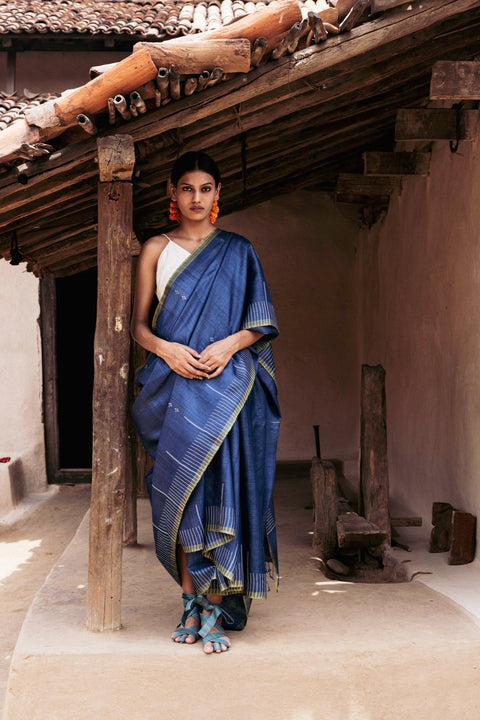
Kosala stocks pit-loom-woven Kosa sarees from verified artisans in Chhattisgarh, each carrying the GI tag for origin and the natural slub, matte sheen, and textured hand that are the marks of genuine handloom Kosa silk.
Yes. The touch test, sheen test, and drape test together give a reliable picture. Burn testing is the most definitive method, but it requires a loose thread and cannot be done in most shops.
No. A natural slub is a characteristic of wild silk varieties like Kosa and Tussar, where the Antheraea mylitta silkworm produces a thicker, irregular filament. It is not a defect. In handloom Kosa silk, it is a sign of authenticity.
The Silk Mark, issued by the Silk Mark Organisation of India under the Central Silk Board, confirms the fabric is made from pure natural silk. It does not certify the silk variety or origin, only the purity of the fibre.
Not reliably on heavy sarees. Dense weaves with thick zari work, such as Banarasi or Kanjivaram, may not pass through a small ring even when genuine. The ring test is most accurate on lighter plain silks.
Kosa silk has a matte sheen, a visible natural slub, and a slightly textured hand compared to the smoother, glossier surface of mulberry silk. A Kosa saree should not look uniformly shiny. If it does, that is a reason to look more carefully.
Look for the Silk Mark or GI tag in the listing, request close-up photos at an angle to see the light shift, check that the fabric description uses specific silk terminology, and confirm the seller has a clear return policy.