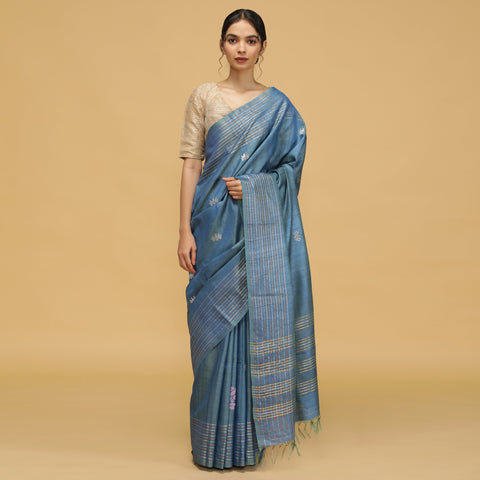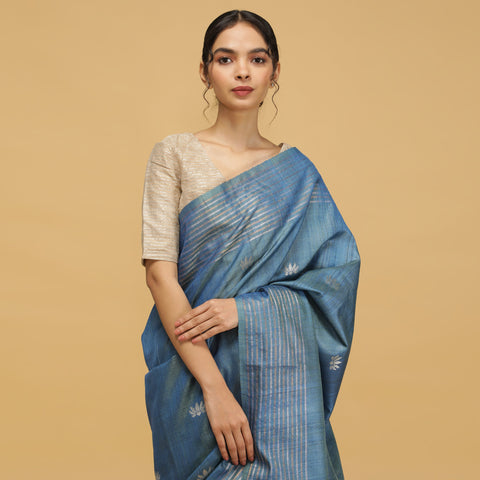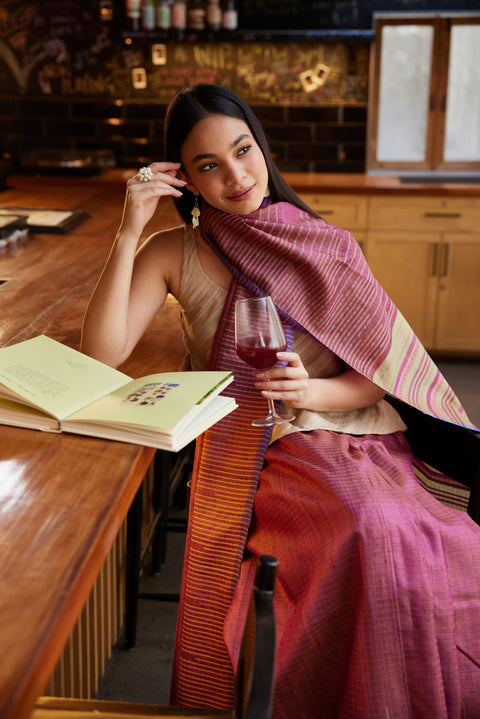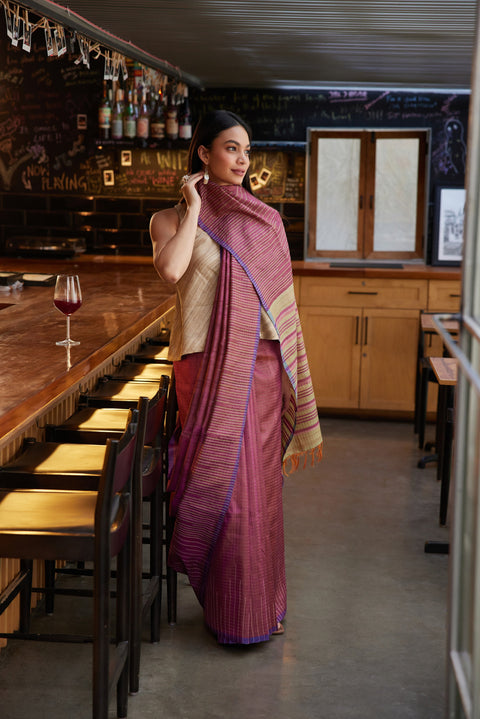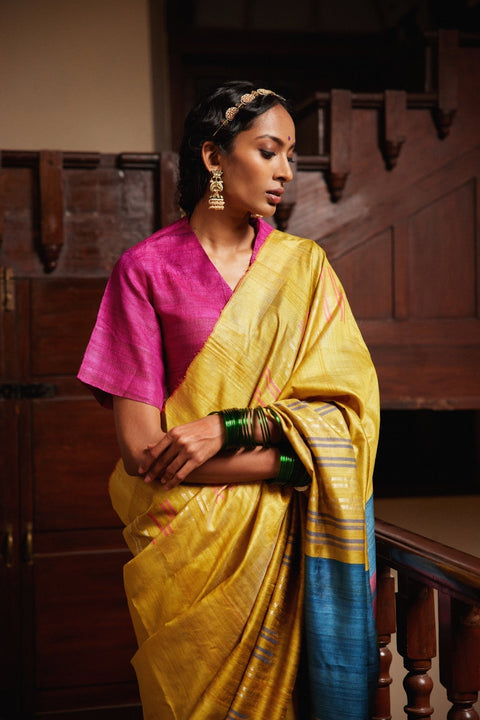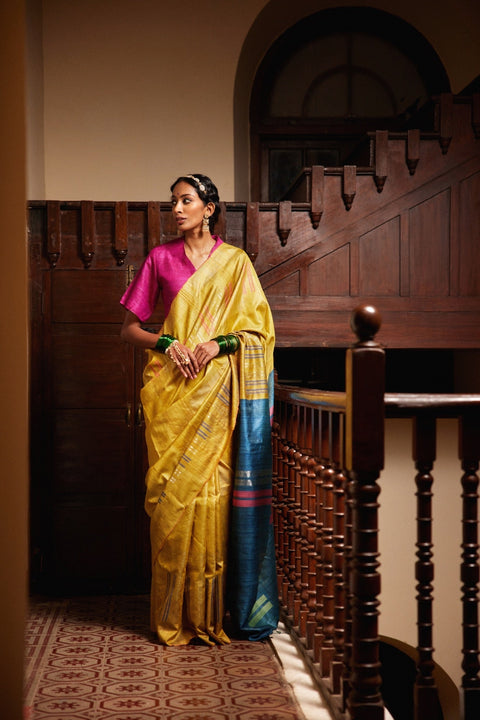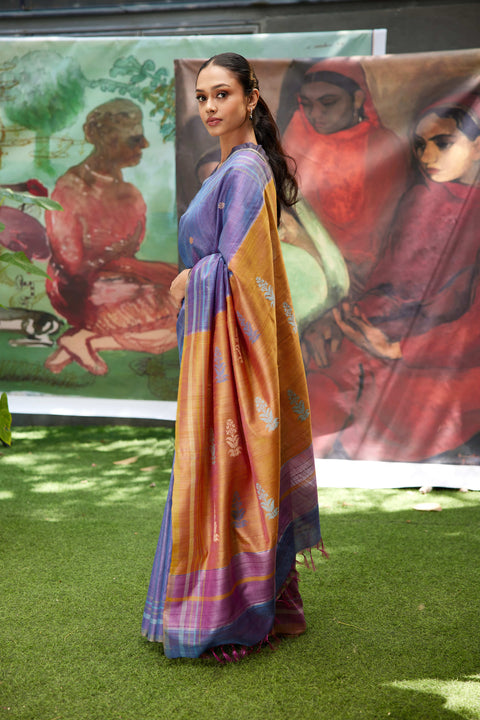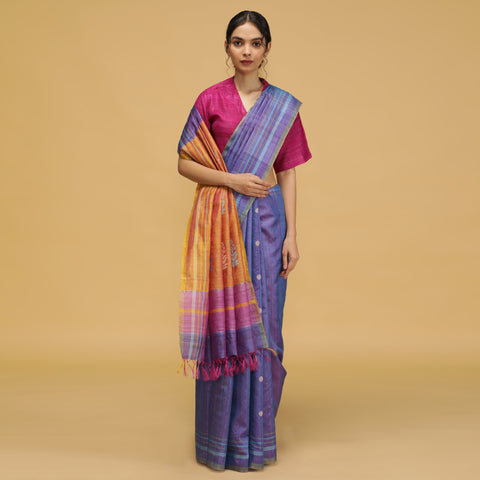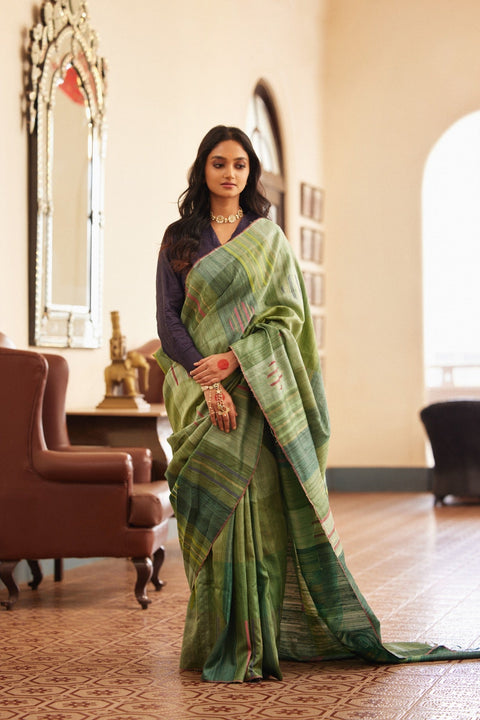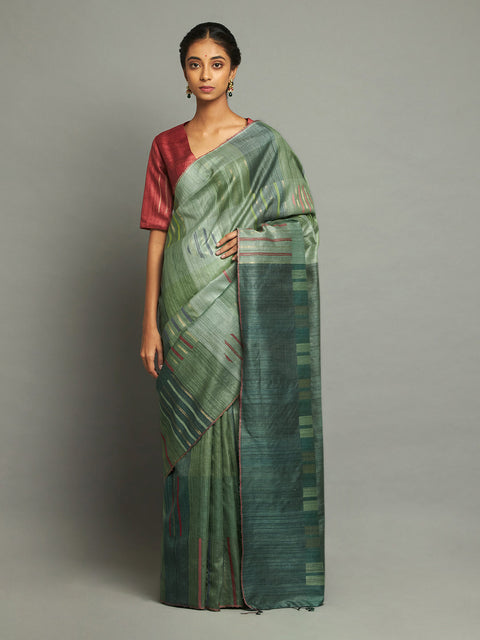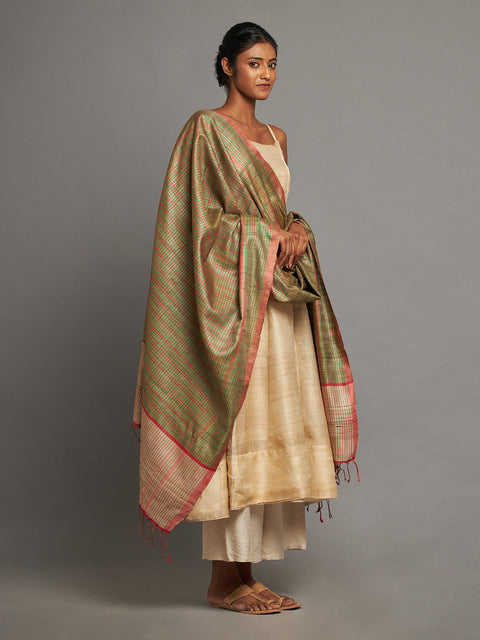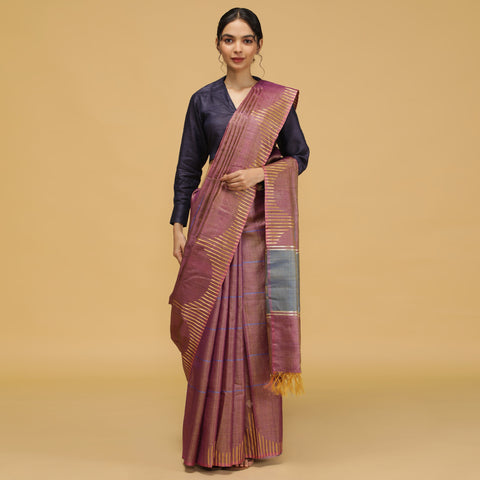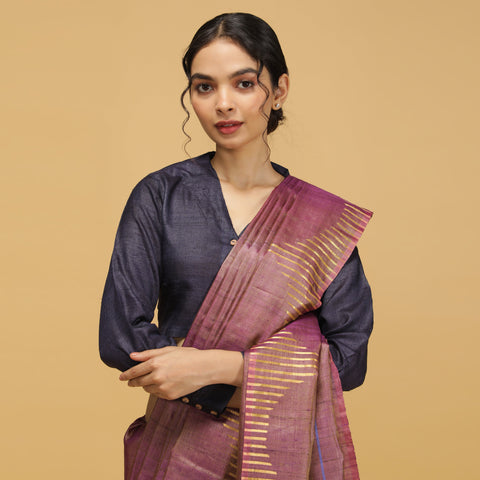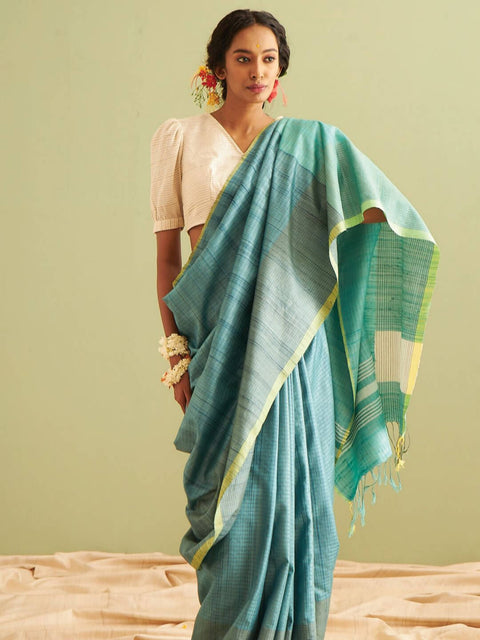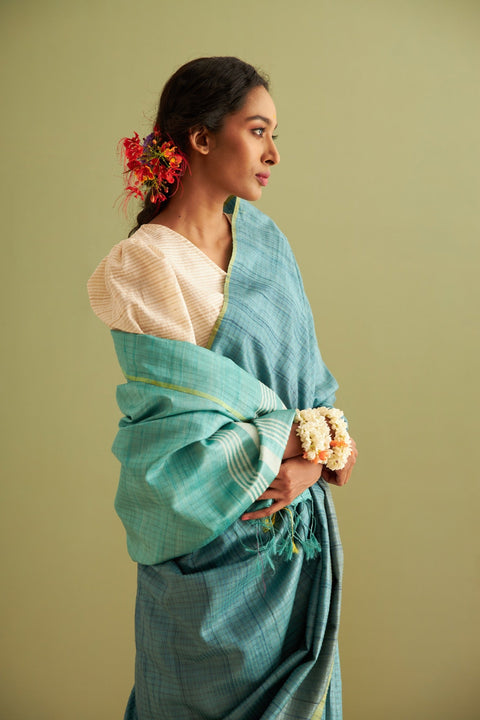


A good farewell saree look starts with comfort, movement, and photographs. It should hold shape while you sit, walk, stand on stage, and meet people.
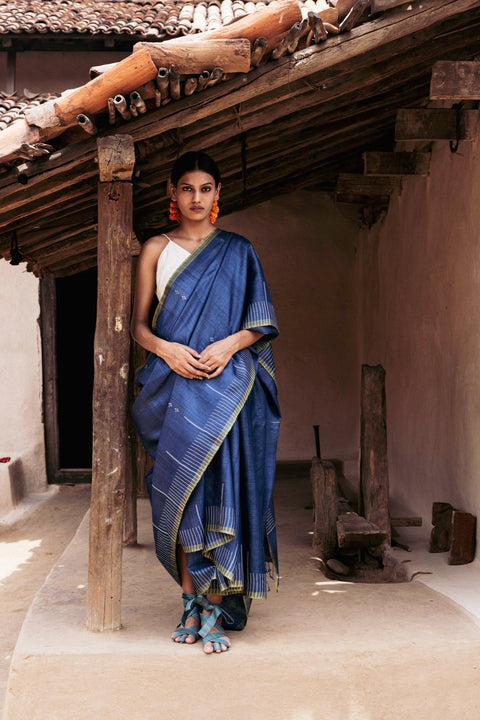
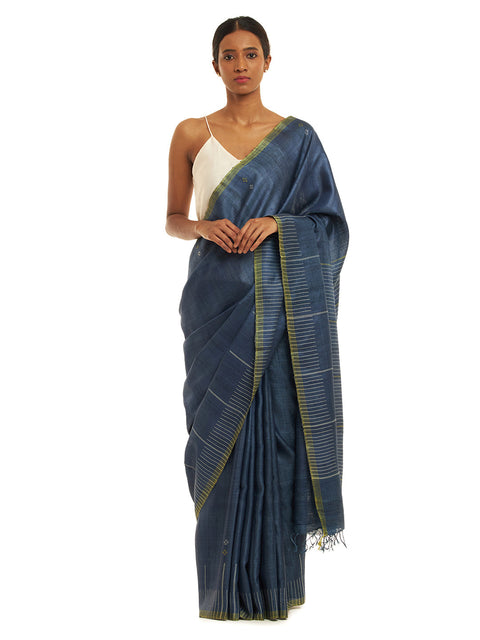
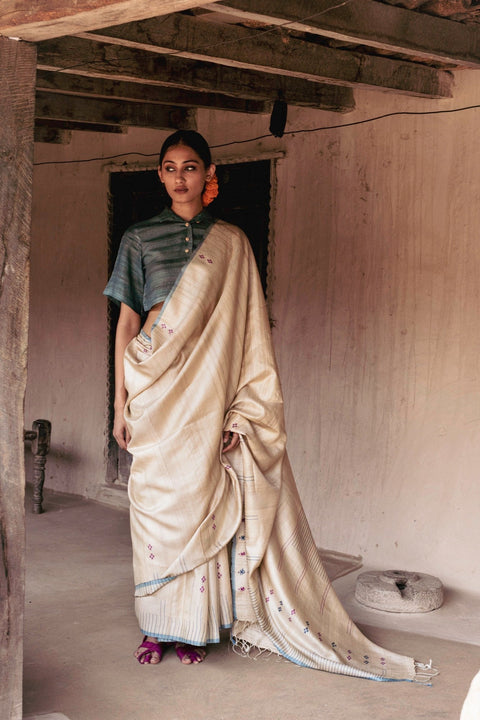
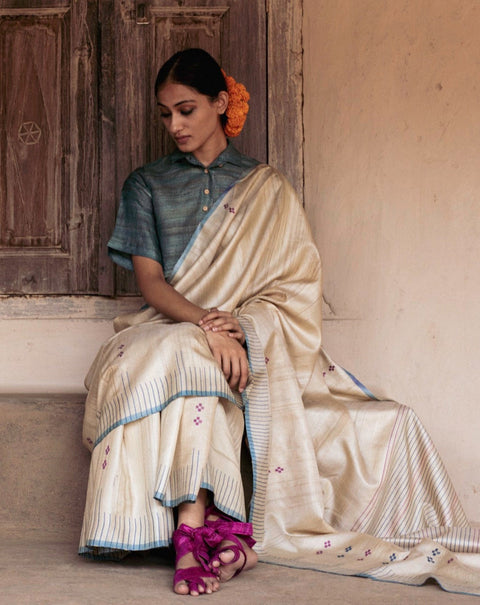
For farewells, choose a fabric that has a body without feeling heavy. Kosa silk works well here because its natural slub, matte sheen, and textured hand help the drape stay neat without looking too formal.
What Saree Fabric Works Best for Farewell?
Not every saree fabric behaves the same through a long event. Choose by timing, movement, and how much adjustment you can manage.
Saree type
Best for
What to know
Kosa silk
Daytime and formal evening farewells
Holds pleats neatly, has a matte finish, and gets softer with wear
Chiffon
Dance-heavy evening events
Light and fluid, but needs more pinning
Georgette
Casual or outdoor farewells
Easy to move in, but less structured
Organza
Short evening events
Crisp in photos, but can feel stiff
Satin
Party-style events
Glossy finish reflects strong light
For college events that move from ceremony to photographs to dinner, a lighter handloom holds up better than a heavy party saree. Sarees for college girls are built around this need, with pieces weighted for full-day wear rather than a single evening.
Which Colour Works for a Farewell Saree Look?
Colour should be chosen by event light first, then by personal comfort. A shade that looks good in daylight may behave differently under indoor lighting.
For morning or afternoon farewells:
Sage green
Dusty rose
Warm ivory
Muted teal
Soft peach
For evening farewells:
Deep emerald
Royal blue
Burgundy
Warm terracotta
Ink blue
Kosa silk has a matte surface, so colour reads softer than it does on high-shine satin. If you want a colour that stays calm under flash, a blue saree for farewell is often safer than a very bright red or neon pink.
A farewell outfit works best when it stays steady through movement and clear in photographs.
What Blouse Style Should You Choose?
The blouse decides whether the saree looks balanced from the front, side, and stage photographs. Keep the neckline clean and the sleeves easy to move in.
Good blouse choices:
Sleeveless: best for warm venues and long wear
Cap sleeve: neat without feeling too covered
Boat neck: works well when the pallu is visible
Square neck: adds structure to softer fabrics
Elbow sleeve: useful for formal office farewells
Avoid very high necks and tight full sleeves if the event includes dancing, long sitting, and repeated photographs. Neckline choice changes how the pallu sits. A boat neck works well when the pallu is meant to stay visible, while a square neck gives softer fabrics a cleaner frame; blouse design for saree can help you match the cut to the drape.
How Do You Keep the Saree in Place?
A secure saree is not about using many pins. It is about placing the few pins correctly.
Use this order:
Tie the petticoat firmly before draping.
Set the first tuck slightly above the natural waist.
Keep front pleats narrow and even.
Tuck pleats at a slight inward angle.
Pin the pallu at the inner shoulder seam.
Add one waist pin only if the fabric feels slippery.
Textured fabrics help because they do not slide as easily as smooth satin. Kosa silk's natural slub is particularly useful here.If you are draping without help on the day, silk saree draping styles can help you place the pleats, secure the pallu, and keep the fall clean.
What Accessories Work Without Looking Overdone?
Choose one focal point. A farewell saree already carries the emotion of the day, so accessories should support the look, not compete with it.
If your saree has a detailed border:
Wear small jhumkas or studs.
Keep the neck bare.
Choose one slim bangle or none.
If your saree is plain:
Add one slim necklace.
Choose earrings that match the blouse tone.
Keep the wrist simple.
For footwear:
Block heels work for indoor halls.
Wedges work for lawns.
Flats work if the venue has stairs or uneven flooring.
Carry a small kit with safety pins, fashion tape, blotting paper, and one spare earring back. These small things matter more than adding another accessory.
Should You Buy or Rent a Farewell Saree?
Buy when the saree can be worn again. Rent when the look is heavily embellished and unlikely to suit another occasion.
Kosa silk fits the first choice because it gets softer with wear while keeping its structure. The same saree can work later for an office farewell, family dinner, reception, or formal ceremony.
The same logic applies to any milestone event with a stage moment. A lighter, textured handloom sits better in photographs than a dense shimmer fabric, and the saree for graduation day weaves reflect that.
How Kosala Thinks About a Farewell Saree Look
At Kosala, the focus stays on Kosa silk, a Tussar variety known for its natural slub, matte sheen, and textured hand. These details are part of the weave, not surface decoration.
Many Kosala sarees are woven on pit looms, where the weaver controls tension, border alignment, and pallu balance by hand. This gives the saree a structured fall without making it feel stiff.
For a farewell, that matters because the saree should move with you and still look composed by the end of the day. A good drape should feel wearable after the photographs are done.
Farewell Saree Styling Frequently Asked Questions
What is the best saree fabric for a college farewell?
Kosa silk, chiffon, and lightweight georgette work well. Choose Kosa silk for structure, chiffon for dancing, and georgette for easy movement during casual or outdoor farewell events while staying neat.
Which colour saree is best for a farewell?
Soft shades work well in daytime, while deeper jewel tones suit evening light. Choose sage, ivory, teal, emerald, royal blue, or burgundy based on venue lighting, comfort, and photo clarity.
How do I keep my saree pleats in place while dancing?
Pin the pallu at the inner shoulder seam, tuck pleats slightly inward, and choose a textured fabric. Kosa silk grips better than very smooth satin or chiffon during quick movement.
What blouse style looks best for a college farewell?
Sleeveless, cap sleeve, boat neck, square neck, and elbow sleeve blouses work well. Avoid tight high necks or full sleeves if the event includes dancing, long sitting, and repeated photographs.
Should I rent or buy a saree for farewell?
Buy if the saree can work for future events. Rent if you want a heavily embellished piece for one evening only. Rewear value should guide the decision after the farewell day.
Learn More