Knowing how to choose kurta colors for men based on their skin tone comes in handy at some point. Read more to know how these tones can complement your skin.
Learn More

Drawer menu

A saree can feel very different after a few hours of wearing it.
Some sarees look light in photographs but feel heavy by the afternoon. Others stay comfortable all day without needing constant adjustment.
That difference usually comes from the fabric, weave, and construction.
When choosing summer sarees, comfort matters just as much as appearance.
The right saree should:
feel breathable
stay manageable for hours
drape neatly
work well in heat and humidity
Small details make a bigger difference than most people expect.
The problem is not always the main fabric. Most discomfort comes from specific design details.
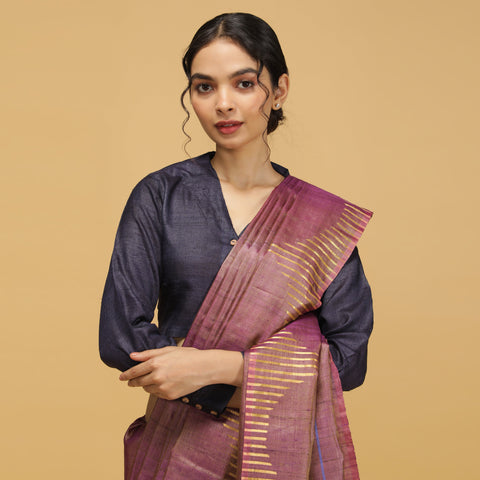
A dense pallu adds weight to one shoulder. Heavy zari and embroidery can feel tiring after a few hours. If the pallu is significantly heavier than the body of the saree, that imbalance becomes noticeable by the second or third hour.
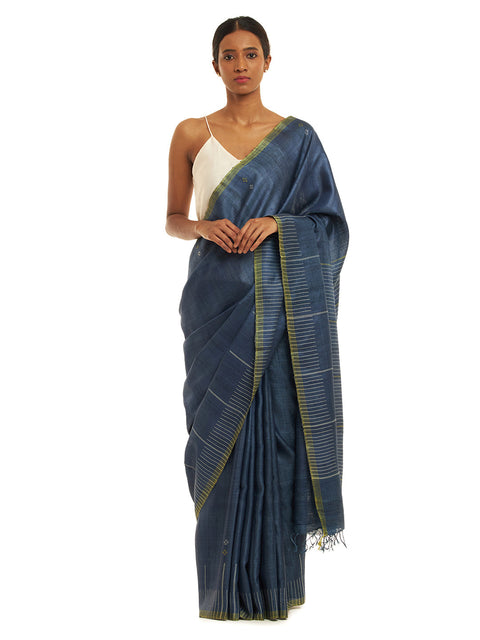
Tightly woven fabrics trap heat along the body because the thread count leaves less room for air to move through the weave. Whether a silk saree in summer stays comfortable or becomes difficult depends more on weave structure than on silk itself.
Wide zari borders add stiffness along the bottom edge of the saree. That stiffness changes how the fabric falls and can make the pleats harder to manage while walking or sitting for long periods.
Some sarees come with a full inner lining. Lining adds an extra layer of fabric against the skin, which reduces airflow and makes the saree noticeably warmer in humidity.
Here are the most important things to look for:
|
What to Check |
Better Choice |
Avoid |
|
Fabric weight |
Lightweight handloom fabric |
Very heavy silk |
|
Pallu |
Minimal work |
Dense embroidery |
|
Border |
Narrow borders |
Thick zari borders |
|
Fabric blend |
Natural fibers |
Polyester blends |
|
Finish |
Matte texture |
Very glossy shine |
A saree should feel balanced across all six yards.
A lightweight body with a heavy pallu can still become uncomfortable.
Different fabrics suit different occasions.

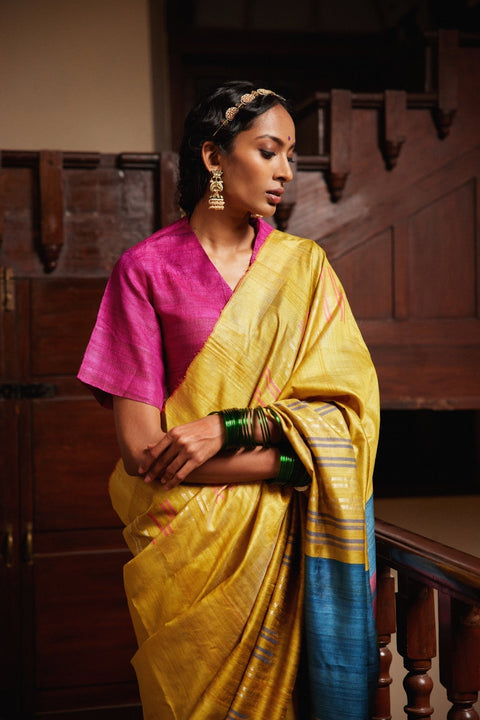
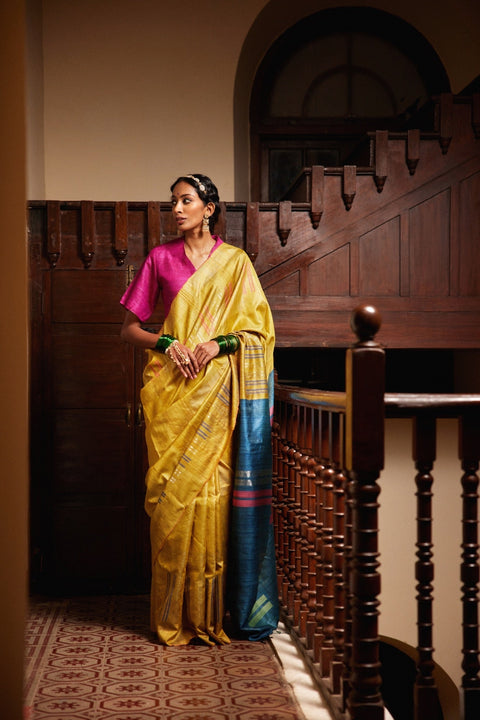
Kosa silk works especially well for long indoor events.
The fabric:
feels breathable
holds pleats neatly
stays structured without stiffness
photographs beautifully
The natural texture also gives the saree depth without needing heavy embellishment.
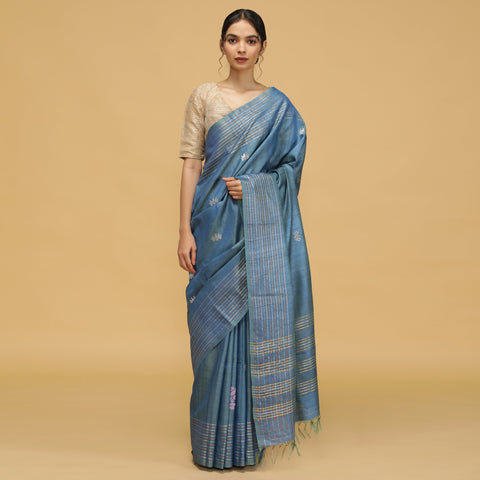
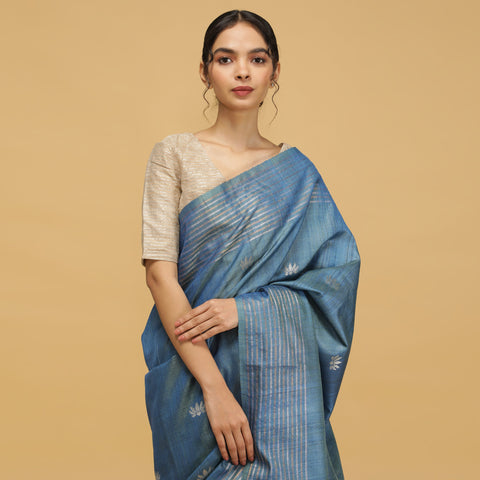
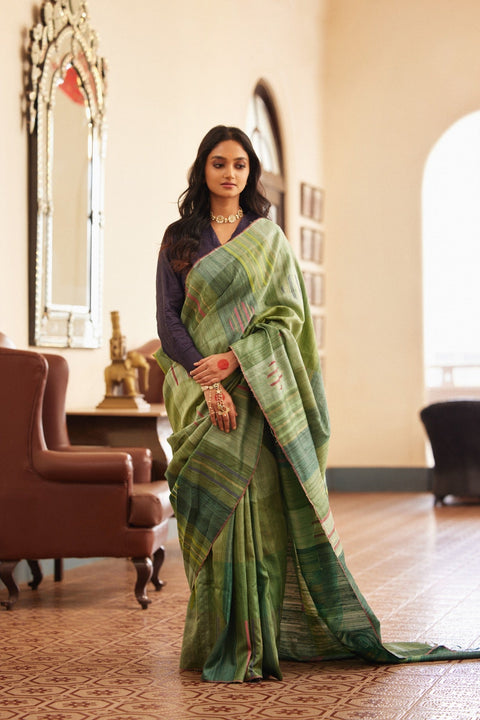
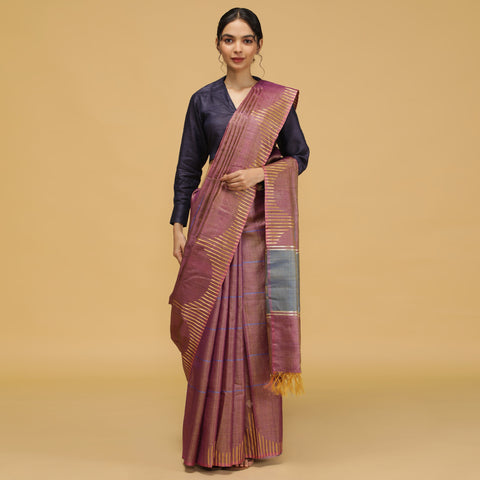
For elegant textured silk styles, Pure Kosa silk sarees in lighter weaves sit in the middle range of weight, structured enough to hold pleats, fine enough to stay comfortable through a four-hour indoor event.
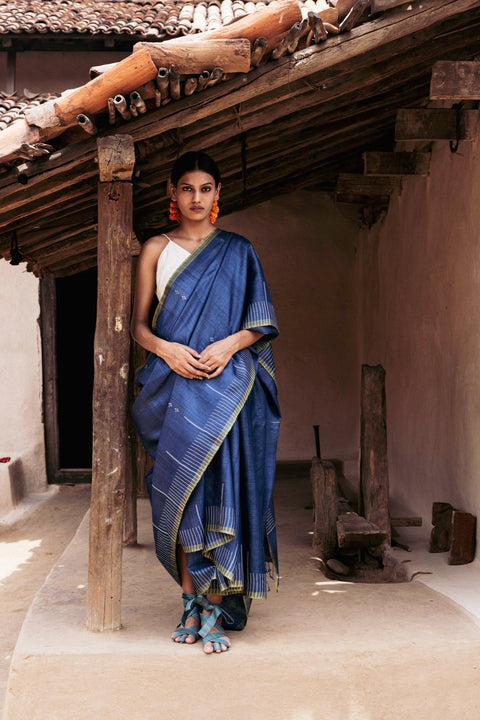
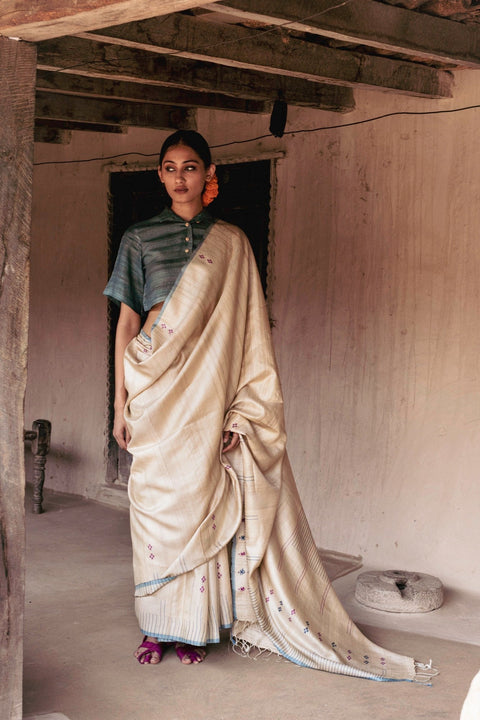
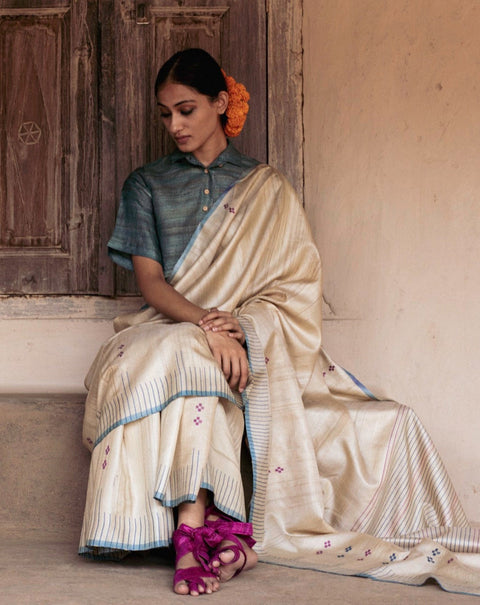
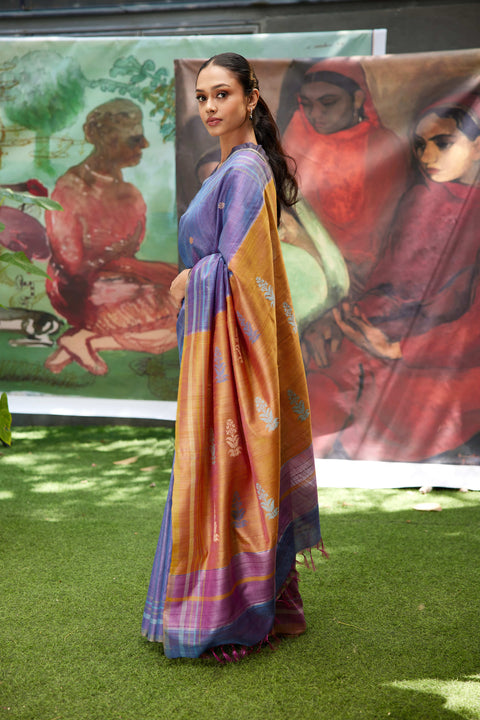
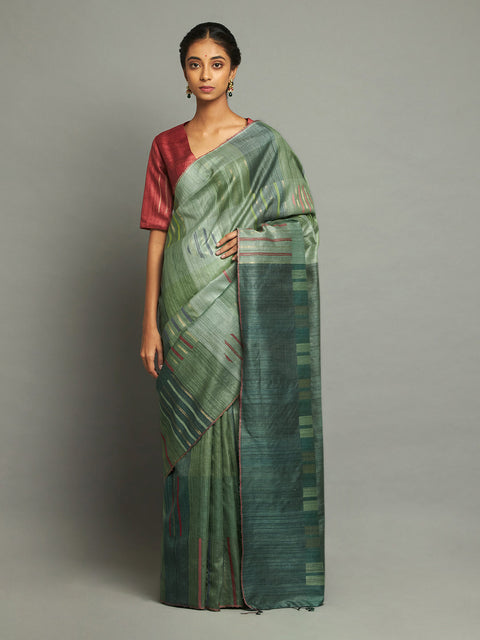
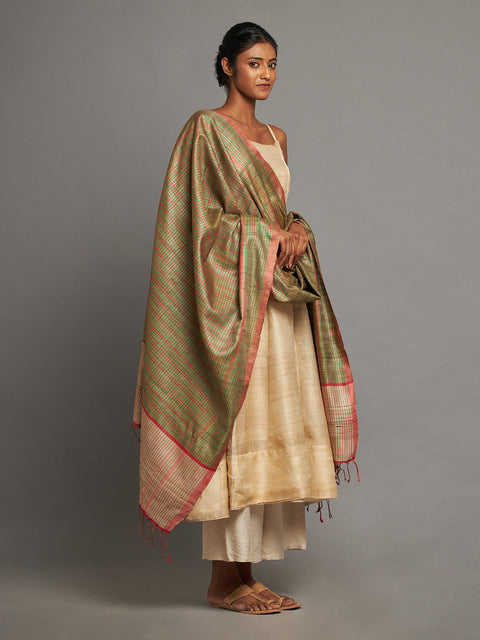
Plain Tussar silk sarees feel light and airy. The fabric works especially well for daytime events and outdoor occasions. Unlike Kosa silk, Tussar has a looser, earthier drape that moves more freely in heat. Its matte finish also photographs naturally in sunlight without reflecting harshly.
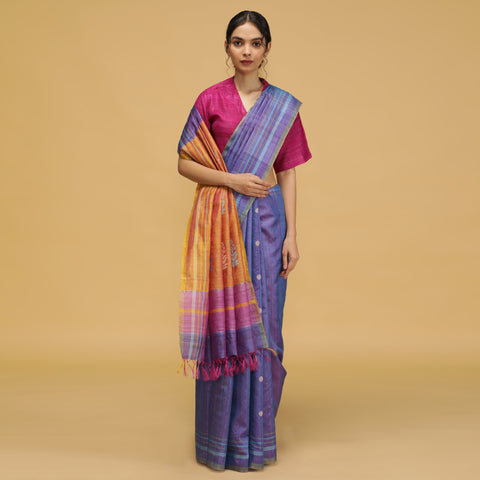
Cotton silk blends feel softer and lighter than heavier silks.
They are practical for:
office events
casual celebrations
daytime gatherings
The drape feels less structured than Kosa silk but absorbs light moisture better, which makes them a reliable choice for outdoor events in humid weather.
Choosing the right saree fabric for summer comes down to how the cloth moves air and holds its shape without stiffening in humidity.
Colour affects comfort more than people realize.
Dark colours absorb more heat outdoors.
Very glossy fabrics can also reflect harshly in photographs.
The most practical summer shades are usually:
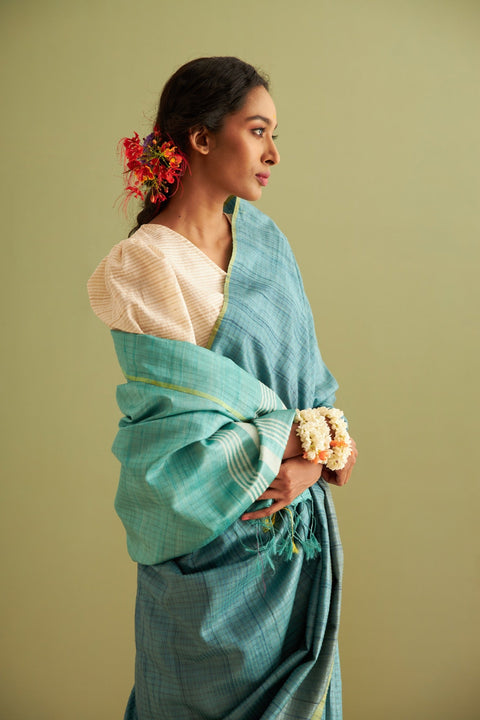
sage green
dusty rose
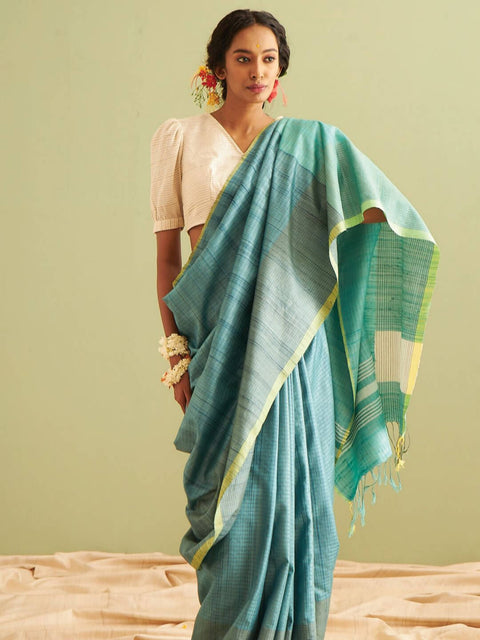
powder blue
ivory
terracotta
These colours feel softer in daylight and photograph well in natural lighting.
A good summer saree should feel easy to wear from morning to evening.
Look for sarees that:
stay breathable
hold pleats properly
feel light on the shoulder
move comfortably while walking
The saree should support the occasion, not become difficult halfway through the day.
Fabric weight, weave structure, and drape feel all behave differently when the temperature rises, a saree that feels fine indoors can become difficult within an hour outside.
Kosa silk has a naturally textured weave.
That texture allows airflow while keeping the saree structured.
The fabric also:
stays breathable in humidity
holds shape for long hours
feels elegant without heavy shine
works well for festive and semi-formal occasions
The textured weave that makes Kosa silk breathable is the same quality that keeps it structured without stiffness. It does not collapse in humidity the way lighter synthetic fabrics do. Handloom silk sarees in this weight range tend to be the most practical choice when an event runs from morning through the afternoon.
The best summer sarees are the ones you can wear comfortably for hours.
Check the pallu weight: If it feels heavier than the body of the saree, that imbalance will show up after two or three hours of wearing. A pallu with minimal embroidery and a narrow border keeps the weight distributed evenly.
Check the weave: A handloom fabric with natural variation in the thread allows more airflow than a tightly woven machine-made equivalent. That difference is not visible in photographs but is noticeable within an hour of wearing.
Colour and design come last: Once the fabric and construction feel right, the saree will stay manageable from morning to evening, which is the only real measure of whether a summer saree works.
Comfort and elegance should work together. When the construction feels right, the saree becomes much easier to wear through long summer days.
Lightweight handwoven fabrics like Kosa silk, Tussar silk, and cotton silk blends work best because they feel breathable and comfortable during long summer occasions.
Heavy pallus, thick borders, and dense embroidery usually add weight. Synthetic fabrics can also trap heat and become uncomfortable in humid weather.
Yes. Lightweight handwoven silks like Kosa silk and Tussar silk feel breathable and hold their drape well without becoming excessively heavy.
Soft shades like sage green, ivory, dusty rose, terracotta, and powder blue feel lighter in sunlight and photograph more naturally outdoors.
Handloom sarees usually feel more breathable because of their natural weave texture. They allow better airflow compared to tightly woven machine-made fabrics.